
This post may contain affiliate links.
Princess Louisa Inlet is one of those places you must experience to appreciate. Located 50km (30 miles) up a stunning but near-deserted inlet north of Egmont on BC’s Sunshine Coast, Princess Louisa Inlet is a boater’s mecca. Yet fewer journey here compared to the ever popular Desolation Sound north of Powell River further up the coast. Distance, perceived isolation and a tricky access through Malibu Rapids likely scare off a few boaters. But don’t let it deter you. This place is magic.
Entering Princess Louisa Inlet
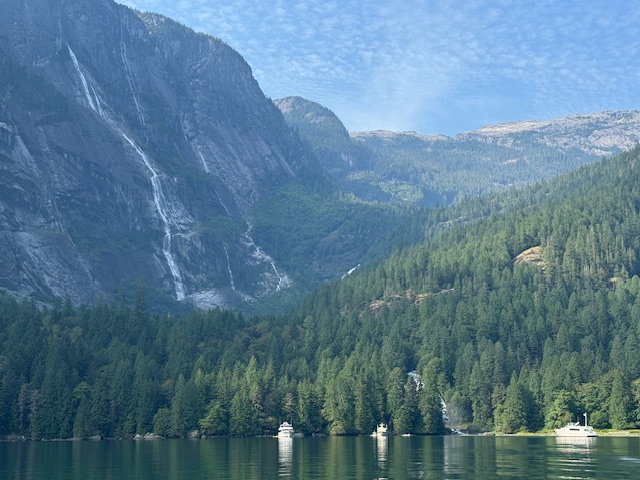
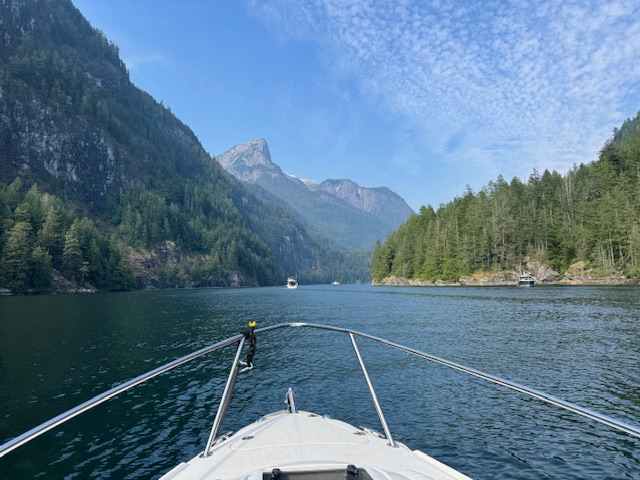
As you enter Princess Louisa Inlet, the calm, protected waters of the fjord give rise to sheer granite walls and trees stretching skyward to mountains on all sides, with snow-capped glaciers in the distance. Multiple waterfalls cascade from heights over 1000 ft to the inlet below, the most prominent being Chatterbox Falls, the crown jewel attraction at the far north end of the inlet. There, the constant sound of thundering distant falls is restfully hypnotic. The lightly misted pure air, seems infused by the sweetness of cedar and maple mixed with lush moss aerating on trees close to the falls. The sights and scents here are a potion for relaxation and renewal.
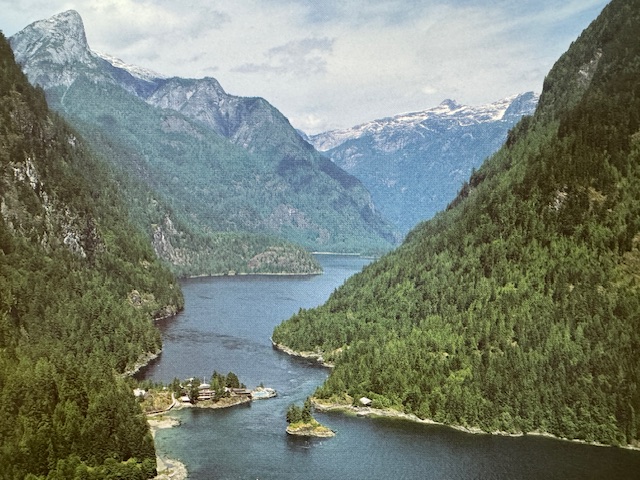
Be it on anchor, a BC Parks buoy, or tied up safely to the dock by Chatterbox Falls, those lucky enough to spend a night or two in Princess Louisa, know the magic feeling evoked in this place.
But it is the sweet scent of the pure air unique to Princess Louisa which has stayed with me since visiting this summer. It reminded me of the ever present scent of tropical flowers in Hawaii when you first disembark the plane upon arrival. That’s an impossible parallel, and obviously out of context. But if you are fortunate enough to make a return visit to Princess Louisa Inlet, you’ll understand how the pure, sweet mountain and ocean fjord air evokes the same sensory familiarity.
Princess Louisa FAQs
The easiest way to reach Princess Louisa Inlet is by private boat through Malibu Rapids, though boat tours, float planes, and helicopter tours from Egmont, Pender Harbour, and Vancouver also offer access.
Boats should time their arrival at Malibu Rapids for slack tide, when the water is neither rushing in nor out, since strong currents make the narrow passage hazardous outside that window.
Boaters can anchor with a stern tie, take a BC Parks buoy near MacDonald Island or across from Chatterbox Falls, or tie up at the dock by Chatterbox Falls. Both dock and buoy overnight stays are by donation.
Yes, the trapper’s cabin hike is a steep, often slippery 2-hour climb (each way) with rope-assisted scrambles, making it suitable only for fit, cautious hikers.
No, cell coverage is largely unavailable in Princess Louisa Inlet, though satellite systems like Starlink work. Boaters occasionally pick up a faint signal.
History of Princess Louisa Inlet
Princess Louisa Inlet was formed by gigantic glaciers millions of years ago and is guarded at its entrance by mountains 2500 meters (8200ft) high. Though First Nations people call the inlet Suivoolot (meaning “sunny and warm”). It was named Princess Louisa last century after Queen Victoria’s mother, Marie Louise Victoire.
A summer adventure
We ventured to Princess Louisa Inlet in July 2026. We’ve sailed BC’s coastal waters up to Desolation Sound in the past skippering chartered vessels up to 45 feet. But this time we were adventuring in our 23’ Campion, based out of Pender Harbour, where we keep it to access our cabin on Nelson Island. The Campion was small compared to other boats in the inlet, but proved versatile for a four day outing with its generous V-birth for sleeping, and kitted out temporary galley with camp stove and portable fridge plugged into the battery.
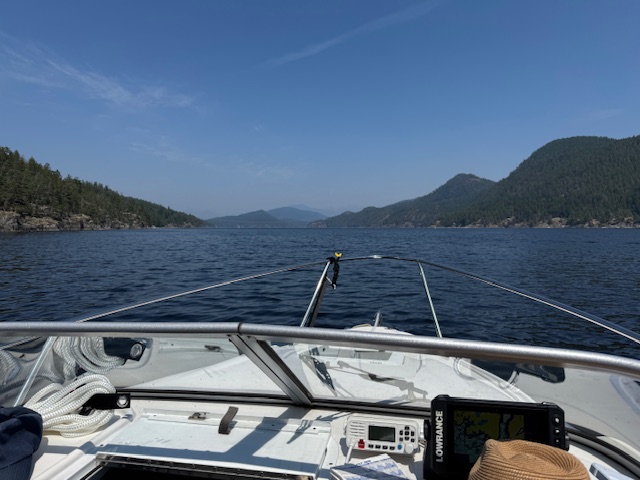
On the dock beside all the massive yachts, our boat was looking more the size of a tag along boat tender. But we considered ourselves lucky to be tied up, having relinquished the necessity of setting an anchor and stern tie, which can be challenging in the inlet’s deep waters.
Our 150hp engine off the back also meant we could make the distance from Pender Harbour to the Malibu Rapids entry in about 2.5hrs, where larger motor cruisers and keel boats needed the full day to reach the entrance.
Typically many boats coming up from Vancouver, Victoria or Washington State will overnight in Pender Harbour to gas up and provision, before heading off to Princess Louisa Inlet. The last stop for fuel, if not in Pender Harbour, is Egmont further up Agamemnon Channel.
Accessing Princess Louisa Inlet
Adding to the mystique of Princess Louisa Inlet is mother natures guarded entry through Malibu Rapids, ensuring that only vessels who have endured the 50km journey up inlet, and those who have timed their arrival for slack tide, are granted access. Slack tide, when the water is neither rushing in or rushing out of the narrow passage to the inlet, is typically available only a couple times each day. Between high and low tides vessels can transit safely, avoiding hazardous currents that run through Malibu Rapids.
Malibu Lodge
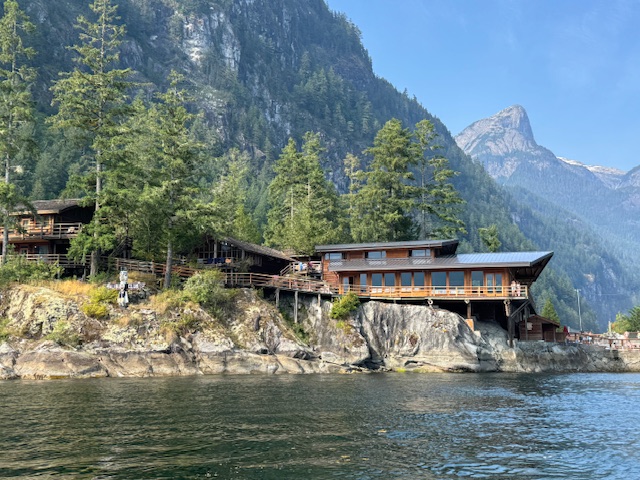
After 30 miles of wild wilderness up Jervis Inlet, the sight of Malibu Lodge is welcome assurance that you’ve made it. The Lodge, sitting at the entrance to Princess Louisa Inlet, was built as a luxury rustic resort for Hollywood stars during World War II. It fell into disrepair until Young Life, a Christian group based in Oregon, turned it into a summer youth camp. During the peak months of July and August, the camp can accommodate 400 youth each week, typically from all across the US. As you pass through Malibu Rapids, you’ll likely see them diving in the pool, engaging in other camp activities, or standing by as a curious audience watching vessels pass.
Malibu Rapids
Transiting Malibu Rapids can be intimidating, but it needn’t be. Navigating at slack tide is ideal when there is a large swing – like 15ft over 7-8 hours. When the tide flood or ebb is less, or over a longer time period, boaters can pass up to an hour before or after slack tide. Typically this applies to power boats with enough horse power giving them the ability to motor against a slightly running current. Sailboats with less power, and with a lot more draw beneath the water with their keel, will likely want to pass through Malibu Rapids as close to slack as possible.
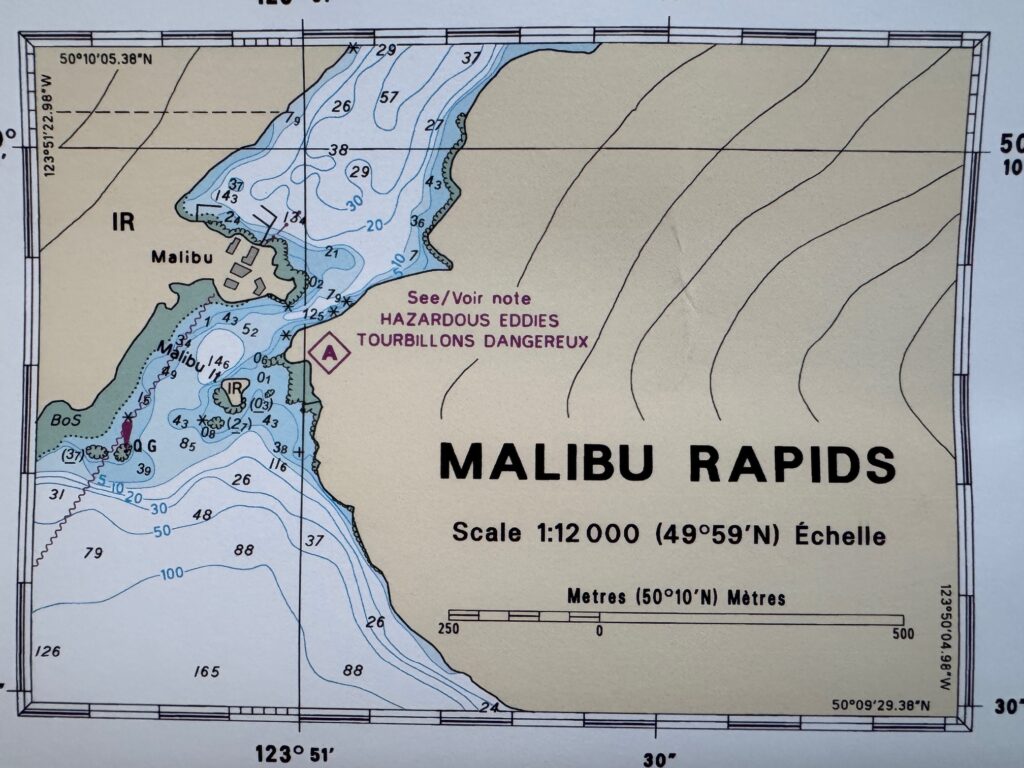
All boats entering and exiting Malibu Rapids should monitor channel 16 before transiting, as there is limited space in the narrowest part of the rapids, especially at low tide. Having radioed our intention to enter, boaters on the other side responded letting us know of any traffic currently in the channel. While sailboats are easier to spot with their mast rising above the rocks, power boats can be a challenge, and there is always a possibility that a boater may have entered without making a call on channel 16. It’s best to avoid surprises! Once you’re through Malibu Rapids, the inlet is deep and without obstruction.
Anchoring, buoys and the dock
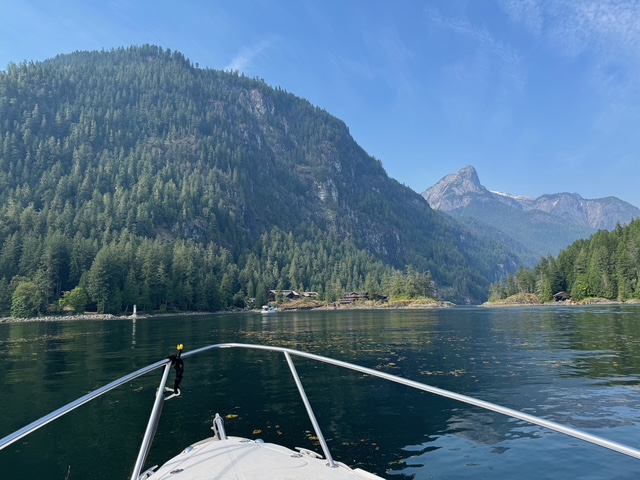
It can be a challenge to find suitable depth to anchor in Princess Louisa Inlet. Having ample anchor line and using a stern tie to shore is critical, but there are plenty of trees and opportunities along the shoreline close to the falls. Do be mindful of the drifted sand immediately below the falls which can alter the depth significantly close to shore.
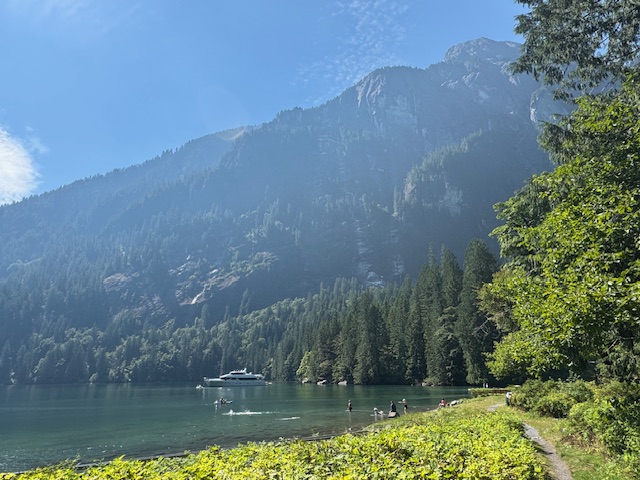
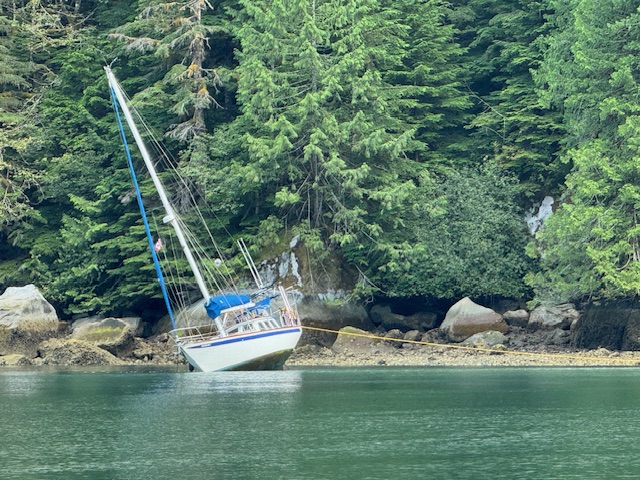
We saw one poor fellow who had grounded overnight while anchored, forced to wait for high tide later in the day to free his boat.
Fortunately there are five park buoys at MacDonald Island and another six buoys closer to Chatterbox Falls, in addition to a substantial park float at the head of the inlet, as an alternative to anchoring.
When we visited in July 2026, we spent two nights on the dock, and then moved to a buoy by MacDonald Island for the third evening. We found boaters depart the dock and buoys to hit slack tide in Malibu Rapids, so moving to the dock or a buoy during those change over times worked well. The dock and floats definitely fill in each day with newly arriving boats.
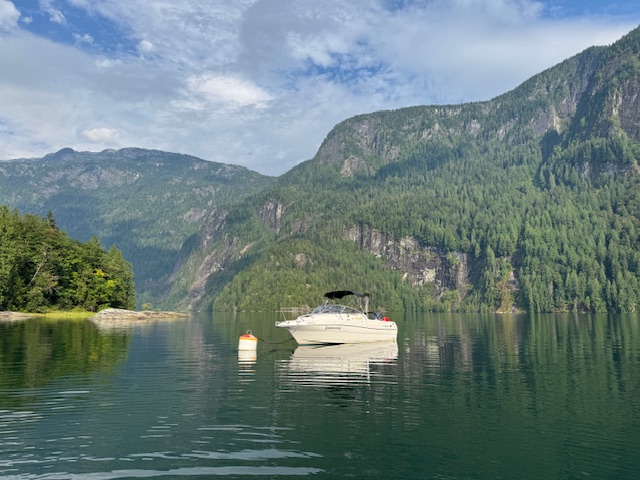
Moorage at the dock is by donation, regardless of boat size. The suggested amount is $20/night. Floats maintained by BC Parks off Macdonald Island have a suggested donation of $10/night. Both locations have envelopes and a metal drop box area for cash, or boaters can donate electronically via the QR code.
Pets who cruise
While staying on the dock two nights, it was quite amusing to watch the morning and evening dog shuttle to shore in boat tenders. Nothing screams anticipation quite like a labradoodle poised as a hood ornament off the front of a boat. Smaller dogs seemed to arrive on paddleboard shuttles from nearby floats or anchorages. A few vessels at the dock had dogs too, and there was at least one cat – a senior named “Lily” who took an evening stroll down the dock.
Harry the heron
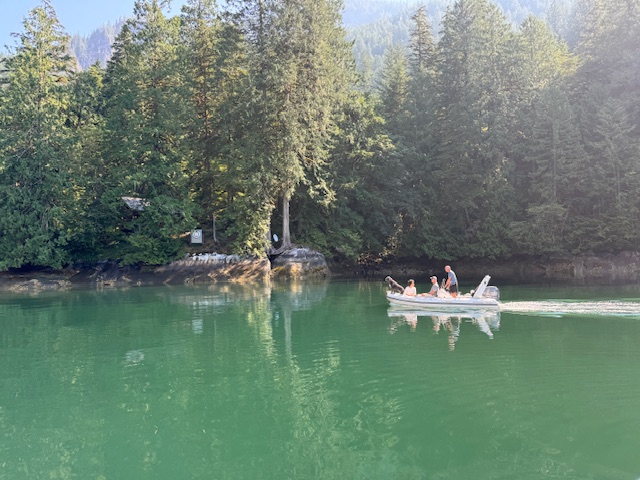
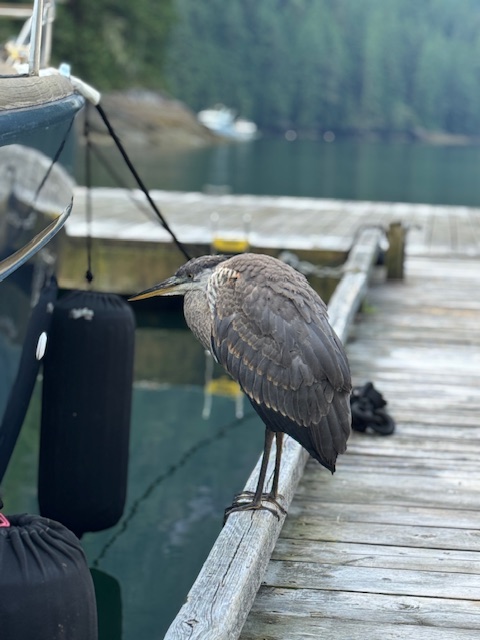
New in summer of 2026 is a resident blue heron who hangs out at the dock. According to Bob from Victoria, who visited Princess Louisa Inlet last summer, the heron arrived in fall 2025 and has stayed, becoming increasingly desensitized to humans. “Harry”, as the boating community has named him, is completely unbothered by people. Even as Lily passed by, it failed to dislodge him from an intent perch on the docks rail, ready to snatch a fish near the surface.
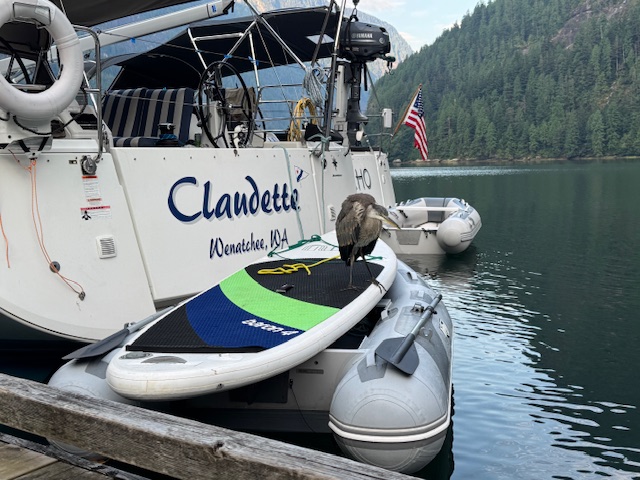
I found Harry one morning using a paddleboard as a raft to increase his odds closer to surface catches. Occasionally he would fly away, but his presence was like clock-work in the evening, much to the entertainment of nearby boats.
Princess Louisa Marine Provincial Park
Princess Louisa Marine Provincial Park was not always publicly owned. It has an interesting history.
The legend of James “Mac” Macdonald
The land surrounding Chatterbox Falls at the head of the Inlet was originally owned by an American named James Macdonald, when he purchased the 292 acre property from the BC government in 1927. His presence with a log cabin residence disturbed a few people, most notably Muriel Blanchet, who wrote about “the man from California” in her book “The Curve of Time” – a book featuring adventures in the area as a widow with her five children on a 25’ boat.
Macdonald, or “Mac” as he became known did come to recognize his intrusion after welcoming yachtsmen for over 25 years. He turned down generous offers to sell the property to hotel chains and resorts. And prior to his death, he transferred it back to the non-profit Princess Louisa Inlet International Society, and passed administration of the property to the BC government in 1964.
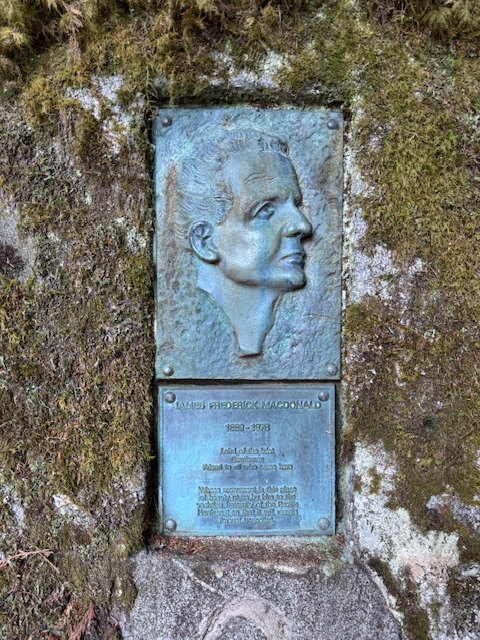
Today that area is known as the Princess Louisa Marine Provincial Park. The marine park also includes Macdonald Island and adjacent lands to the island. BC Parks maintains outhouse toilets in both areas, along with a small dingy landing float by Macdonald Island, and the large main dock by Chatterbox Falls.
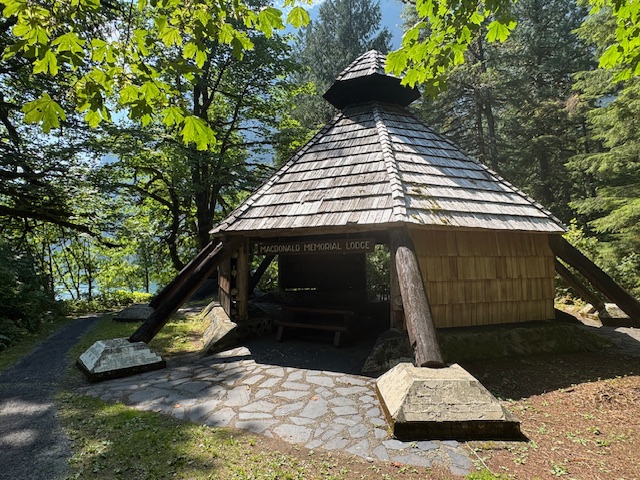
There is a plaque commemorating Macdonald’s contribution at the base of Chatterbox Falls, as well as a BC Parks pavilion in his name.
Activities in Princess Louisa Inlet
Swimming, SUP, hiking and lounging are all worth activities in the area.
Chatterbox Falls
There is a loop trail from the main dock which takes you for a closer look at the base of Chatterbox Falls. Signs warn to not climb on the wet rocks around the falls, since 12 people have fallen to their death in the past. Along the trail you’ll find Macdonald pavilion, offering shelter in the rain. It’s large enough for multiple tables and a fire pit in the center. You’ll find the plaque dedicated to Macdonald close to the foot of the falls along the path.
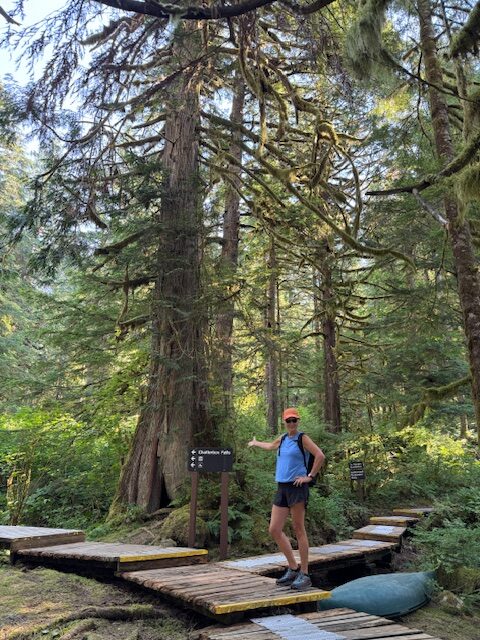
There are picnic tables and benches by the shore for public use, but be mindful if a group of kayakers has set up camp chose by. The clearing is meant for their overnight use. Just off the loop trail, you’ll also see signage to two outhouse toilets.
Swim, SUP or kayak
The river delta from Chatterbox Falls has created a shallow area close to shore which can be used to access swimming in the ocean by the base of the falls. It makes a lovely calm area to swim and paddle, and idle away a sunny day by the shore.
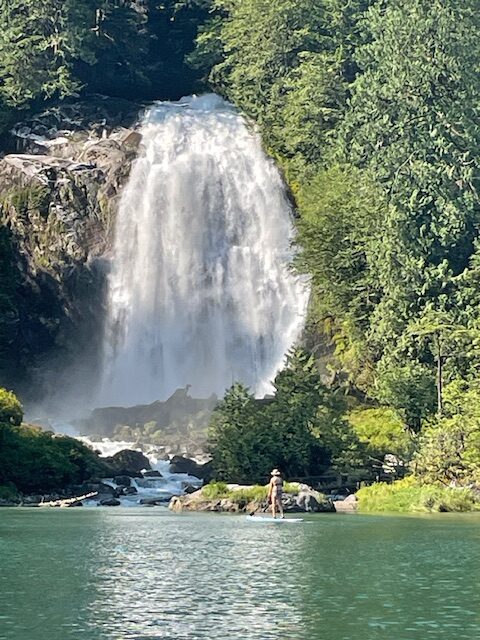
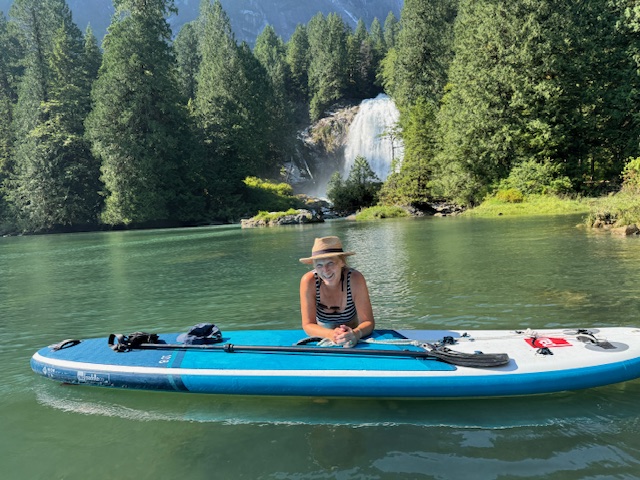
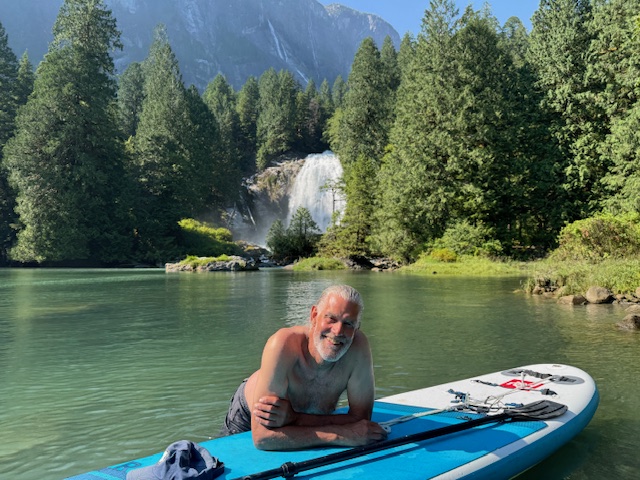
I enjoyed taking the SUP touring around the falls and anchorage, and later while on a mooring buoy by Macdonald Island, paddling around the island and along the shore between Malibu and Beyond Malibu camps.
Trappers cabin hike
The hike to the trapper’s cabin is not for the faint of heart. In fact there is a sign at the base which does its best to deter hikers from embarking on the climb. The trail starts out on an old skid road of logs and snakes up the heavily forested mountainside to the remnants of an old trappers’ cabin – near a waterfall about 1800 feet above sea level. If you’re reasonably fit, the hike will take 2hrs each way. The view from the falls down the inlet towards Malibu rapids is spectacular.
But – and it’s a big but… this trail is gnarly…
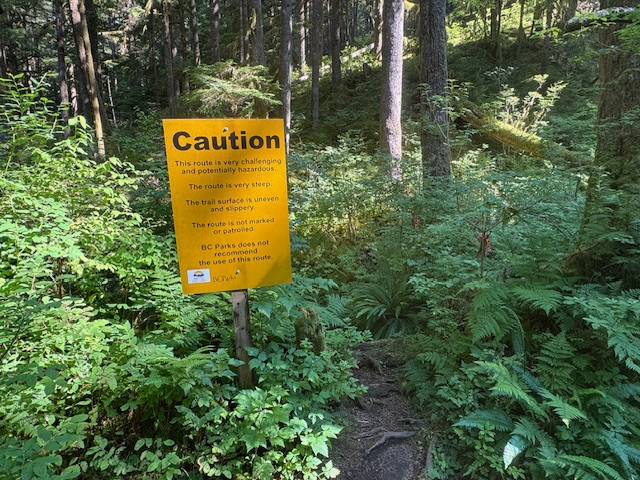
a challenging hike
The trail is steep, wooded and often very slippery and should not be undertaken late in the day, after heavy rains, or if you have vertigo or bad knees. There are multiple scrambles up rocks, over slippery roots and massive logs. We found that even after drying out for several days following a rain, there was a lot of mud. There are four areas where ropes are attached to trees above to assist in climbing up and descending down. The trail is flagged, but the markings are a bit sparse compared to well-maintained trails.
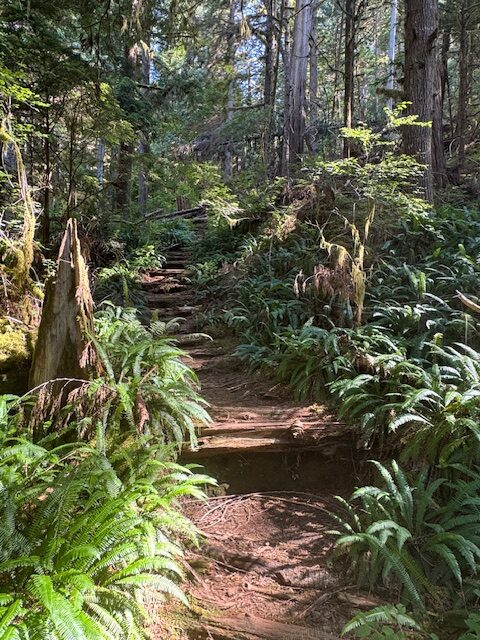
Although the trappers cabin trail is not officially maintained by BC Parks, they do assist with rescues. I suppose there’s comfort in that from May to October while there are rangers on duty. But that is likely why they also deter anyone not fit enough to embark on it. When speaking with Michelle, the park ranger, she noted how they had rescued a heart attack victim recently, and a guy who broke his ankle.
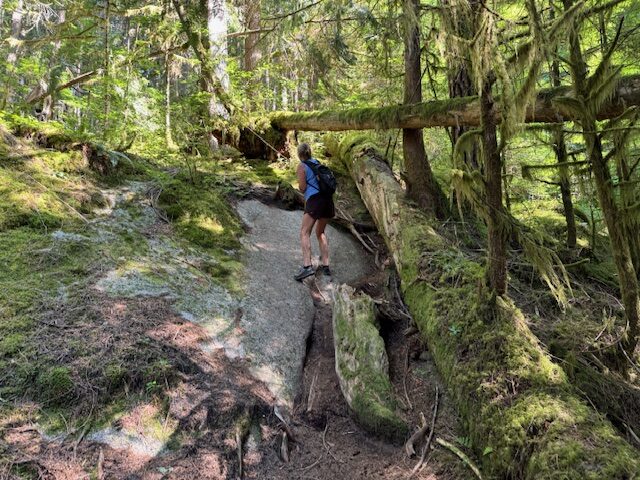
Be sure you have a cell or VHF radio if you require rescue
The day we hiked to the falls, Michelle was on her day off and determined to hike to the top herself, so we found some comfort in knowing she was on the trail with us. It’s notable that cell phones don’t work in much of Princess Louisa, so it would be a good idea to take a hand held VHF radio while hiking, which would enable you to send a distress call if needed.
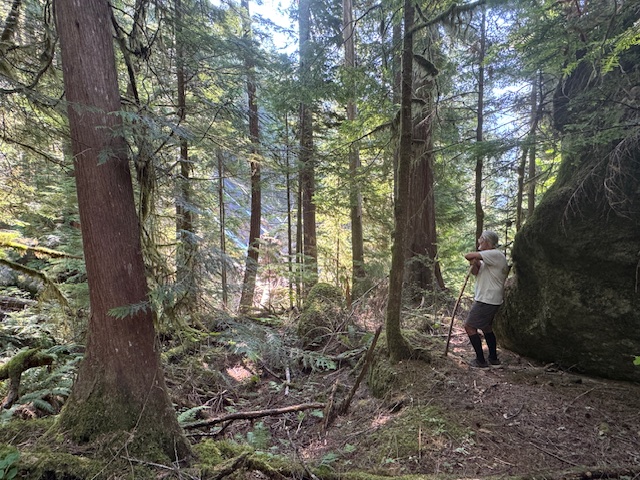
You should allow five hours to get up and back, with a break by the falls for lunch or a snack. We’re pretty fit, and took the full 2 hours as suggested to climb up. The return was a little faster at 1.5 hours. But our thighs were burning by the bottom! Be sure to pack lots of water too. You’ll need it.
The Trappers Cabin
The actual trapper’s cabin is really just the remnants of a log cabin base. I found it amusing to find the frame and springs from a single bed within the cabin foundation. I think it’s safe to say that given the remoteness and challenging access, this was a single man’s refuge!
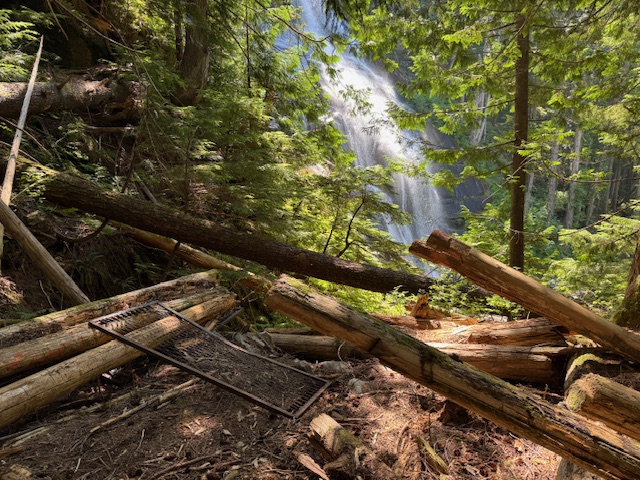
The views of the falls and out to the inlet are spectacular once you make it to the falls and cabin base.
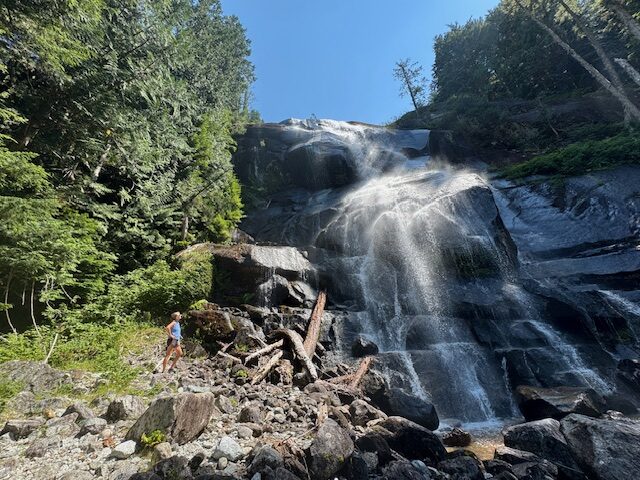
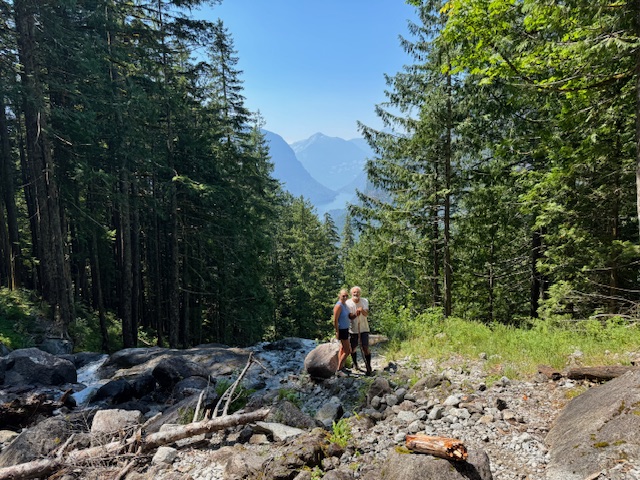
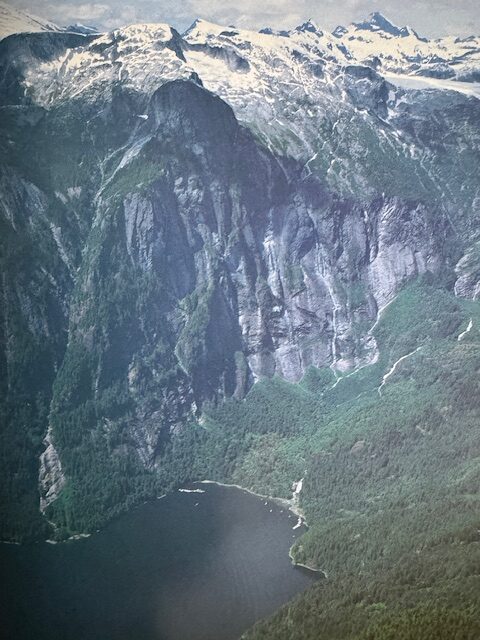
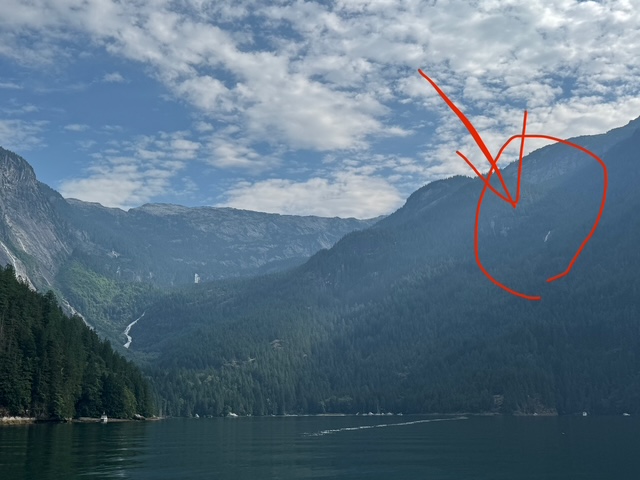
The image below shows the waterfalls by Trappers Cabin in the context of the inlet. It’s a hefty hike up and over from the dock by Chatterbox Falls through some challenging terrain.
MacDonald Island
Away from the hubbub of Chatterbox Falls, Macdonald Island and a section of the northern shoreline are part of the marine park. Convenient, and for the most part peaceful (see note below), staying at a buoy or anchoring by the island would be a good option if you’re arriving late.
After two nights on the dock, we moved to a BC Provincial Park buoy, just off Macdonald Island, across from Beyond Malibu camp. There were five buoys, and a small float to go ashore, plus an outhouse for boaters use. On BC Parks lands, there is also a short 1km hiking trail call “Lee’s Loop”, named after Ming Lee, a long time ranger at Princess Louisa.
We found it enjoyable to swim and sun off the hot rocks by the shore in this area. Teva’s or water shoes were a good idea given the presence of oysters by the shore. There is a rock that barely covers at high tide, marked with a white pole as you approach the buoys. Guarded with caution in a boat, it makes a great destination to swim or SUP with the glaciers in the background.
Beyond Malibu camp
One caution we would note is about camp noise from Beyond Malibu. There’s really only two days you need to be aware of during the summer – Thursday and Friday. Unlike Malibu, at the entry to the inlet, where campers stay on site their entire week, campers at this location are out on six-day adventures – mountaineering up in the high alpine, or kayak tripping out of the inlet. Groups change over on Thursdays, prior to departing the camp Friday morning. So if you’re staying on a buoy on Thursday, be prepared for a steady stream of returning boats of campers, and other youth cheering their arrival on the dock, then lots of laughter and chatter into the evening as they all celebrate their accomplishments.
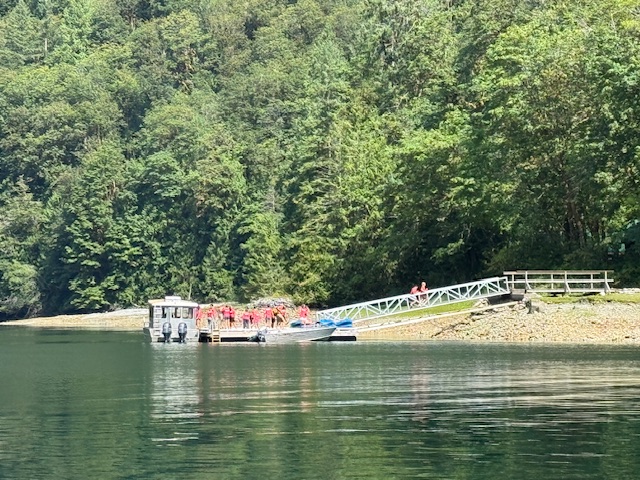
During our time Beyond Malibu had seven groups out, but guides noted that a typical week would have four groups. The total at Beyond Malibu was 70 campers compared to the 400 who were at Youth Life’s main Malibu camp.
It’s wonderful to see young adults taking in such a great experience, but just know it will not be a quiet serene day/evening on the buoy during the change-over days.
Mountain biking in Princess Louisa?
While out exploring on the SUP by Macdonald Island, I noticed two private floats with ramps between Beyond Malibu and Malibu camps. I went ashore just beside one of them to explore a shallow rock walled structure, thinking it was perhaps for an oyster bed. Closer observation noted it was a large square platform down from numerous trails leading through the bush. I dismissed it as a platform for a future structure, likely associated with the camp.
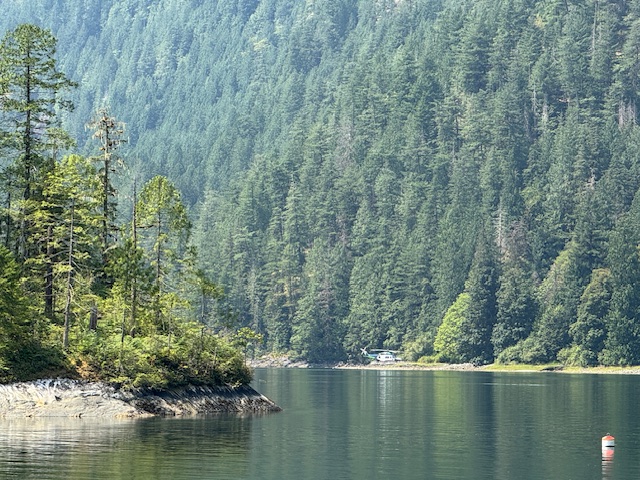
Later that afternoon we watched a helicopter land on the rock platform by the ocean. After realizing its purpose I figured it must still be associated with the camp in some way. The helicopter had flown in from the high alpine. Perhaps it was to help with the youth doing the mountaineering camp experience?
The red Solo cup connection
But it was in the evening, when I paddled by Beyond Malibu camp dock, and chatted up two guides that I got some insight. The one from Virginia said neither the helicopter or the helipad was owned by Youth Life, but rather a “rich guy who invented the red Solo cup”. Both guides reported seeing five helipads up in the high alpine. They should know – they were both familiar with the terrain, having guided up there.
The Beyond Malibu camp guides also reported an extensive mountain bike trail network, serviced by the helicopter, often making daily drops and pick ups in the alpine. One trail called “Albert” they noted, was further down the mountain with wood bridges visible from the water’s edge, but there were others. Indeed, I had paddled by some extensive wood railed pathways on shore seen from my SUP, but had assumed it was part of a footpath trail network leading back to the camp. “It’s weird,” the other guide from Texas noted, “I’ve never seen the helicopter down by the ocean though, only ever flying over. But we know they drop riders up there, because we’ve seen the landing pads.” Both guides figured it was part of a bougie rich mountain biking excursion company.
A mysterious billionaire
Clearly this mountain biking mystery begged further explanation. A Google search came up short, except for a Reddit thread ten years ago about someone seeing a trail network, and hearing a rumour about a billionaire owning land in Princess Louisa. The sparse photos shared checked out, as did the basic story, so I dug a bit deeper.
An exclusive Mountain Biking Club
The Global Conservation Mountain Biking Club is listed as the owner of a large parcel of land beside Princess Louisa. That club was founded by billionaire Kenneth Dart, heir to the Dart Container company, manufacturers of Styrofoam cups and red Solo Cups, among other things. The club has trails in Mexico, Jamaica, Chile, Portugal and New Zealand.
Kenneth Dart
According to an article in Forbes magazine, Kenneth Dart was born in 1955, and is a very private, elusive man. There are few photos of him online. His grandfather was a machinist in Michigan, and his father founded the family business in 1960, creating wealth mass producing food containers. In the 1980s Kenneth Dart started allocating capital outside the business, largely to distressed opportunities with good cash flow, complex regulatory environments, and where other investors were afraid to go. He made billions on British American Tobacco and Imperial Brands, and more recently invested in online gambling and sports book betting.
In the 1990s Dart renounced his US citizenship and relocated to the Cayman Islands, obtaining Caymanian, Belizean and Irish citizenship. In the Cayman Islands he acquired substantial real estate holdings, building out resorts and communities. At one point he tried to change his Florida residence into the Belize Consulate, to avoid taxes, after renouncing his US citizenship. The property later burnt down in an unexplained arson, but his wife continued to live in Florida with his three daughters.
Mountain bike park in New Zealand
In 2010 Dart was actively chasing his mountain biking adventures. He was 55, and around that time he bought land in New Zealand’s south Island, and put millions into building and designing trails over 2000 acres. Trails were reportedly maintained all year, and ridden a handful of times by Dart and guests when they flew in. But in 2019, he gifted the property to New Zealand Department of Conservation. That area has recently been opened for public use as the Wairoa Gorge Mountain Bike Park. Guests can even overnight at the Gibbs Hut, where Dart used to helicopter in and stay. Read more here.
Implications for Princess Louisa Inlet
So what does all this mean for Princess Louisa Inlet? Honestly, I have no idea. My initial theory that the bougie mountain bike operation might be servicing well off clientele helicoptering in from Whistler as a business, quickly gave way to it being simply a billionaire’s playground. I’m not sure how I feel about a lot of privately owned land in the inlet, being in the hands of a well-connected, reclusive billionaire, with substantial real estate and resort development interests in the Cayman Islands.
We can only hope that Dart’s conscience is at least half that of James Macdonald back in 1964, when he gifted the land around Princess Louisa Inlet back to the BC government. And Dart does have a history of supporting public use and environmental stewardship in New Zealand, having donated his land there. But does anyone else find it ironic that the man behind The Global Conservation Mountain Biking Club, reportedly supporting environmentalism, is also the man who mass produces Styrofoam and plastic Solo cups?
Accessing Princess Louisa Inlet
The easiest way to access Princess Louisa is by private boat. Be it power, sail or kayak, if you can find your way in a vessel you own, you will love the destination and the trip getting there.
But there are lots of other options – by sea and by air.
Boat tours
Coastlandmarine.ca
Coast Land Marine operates tours by aluminum boat departing from Egmont to Princess Louisa. The trip takes 6 hours, and can accommodate between 6-12 guests. Book boat tour here.
Sunshine Coast Tours
Sunshine Coast Tours offer tours departing from the Backeddy Marina in Egmont. Tour time runs 5 hours, including some time to explore Chatterbox Falls on the land. Departs daily at 10:30am during high season. Available low season by advanced arrangement. Book boat tour here.
West Coast Wilderness Lodge Zodiac tour
If you prefer the open air and speed of a Zodiac boat, to an enclosed aluminum boat, consider the West Coast Wilderness Lodge Zodiac Tour to Princess Louisa Inlet. Priced per person, the tour takes 5 hours and includes a lunch at Chatterbox Falls. Flight time is 1.5 hours, plus a 30 minute stop and explore on the ground at the falls. Prices are per person, and include both an adult and children’s rate. Book Zodiac boat tour here.
Float Plane
Sea Air Sea Planes
Sea Air Sea Planes does a low level flight along the Sunshine Coast which includes Skookumchuck Narrows on the way to Chatterbox Falls and Princess Louisa Inlet. Includes a GPS enabled inflight commentary that transforms your window seat into the front row. Book your float plane tour here.
Sunshine Coast Air
Sunshine Coast Air offers a flat rate price to charter a float plane, with pricing based on either 2 passengers, or 3-6 passengers, depending on the plane size required.They fly mid-June to the end of September to Princess Louisa. The trip duration is 3 hours, which includes 45 minutes on the ground to explore. Book with Sunshine Coast Air here.
Boat & fly
There is a combined boat and fly option for those who want the best of both experiences – a fly over this coastal region, as well as a one-way Zodiac ride from Egmont through Jervis Inlet. The offering is a partnership between Westcoast Wilderness Lodge and Egmont Adventure Center, serviced by Sunshine Coast Air as a provider. Book the boat & fly tour here.
Helicopter
Helicopter & boat
You can fly to Princess Louisa from Whistler, or depart from Vancouver Heliport with No Limits Heli Centre. This adventure includes landing at a high elevation lake for a picnic, mountain peaks and glaciers. Then return by boat through Princess Louisa and down Jervis Inlet. Available mid-May to mid-October. Book a helicopter & boat tour here. Not cheap, but unique and exclusive. And you’ll almost feel like Ken Dart!
Cell coverage
We found our cell phones didn’t have coverage while at the dock or on the buoy in Princess Louisa Inlet, likely due to the high granite cliffs surrounding the inlet. But there was random single bar coverage occasionally – enough that we received an Amber Alert one evening. Switching to satellite coverage would work however, and many of the boats with Starlink, had full coverage.
One unexpected joy however, was the forced disconnection of not having coverage. We were blissfully unaware of news feeds, social media and email, and that no doubt added to the relaxing atmosphere of Princess Louise Inlet.
That Thursday evening we both mused at the sight of kids doing back flips off the dock at Beyond Malibu. Others were skipping rocks, and huddled in groups talking to each other. We noted how wonderful it was to see youth simply interacting, in a world normally dominated by cell phones. There was not a phone in sight. The way summer’s and kids used to be.
More boat touring adventure on BC’s coast
Learn more about boat touring in Desolation Sound in this article. What To See And Do In Desolation Sound: 10 Pro Tips to Plan Your Trip This Summer.
Where to stay
Egmont or Pender Harbour both make a suitable base for accommodation in the area, with tours departing from Egmont.
Egmont
Boat tours depart from Egmont, so that is the most convenient place to be staying nearby. There are three options.
Westcoast Wilderness Lodge, Egmont
The Heritage Lodge is available May to mid-October. Villas on the Inlet are available year round.
Backeddy Resort & Marina, Egmont
Choose from A-frame cabins, waterfront cabins, or glamping in a geodesic dome.
Bathgate General Store & Marina, Egmont
Bathgate has four suites, meticulously curated.
Pender Harbour
Located 27km south of Egmont on the Sunshine Coast Highway, Pender Harbour is a larger village located in a lovely ocean side community.
Pender Harbour Resort & Marina
Choose from the chalet, guest cabins, yurts, motel rooms or RV site.
Bay Suites or the Tiki Hut Cabin are available to rend.

Mary Charleson
Mary Charleson is an award winning travel writer and marketing/media strategist for 50+ adventure travellers. She publishes Carryonqueen.com and FiveMinuteMarketing.com. In 2025, Carryonqueen.com was awarded 2nd place for Best Self-Published Travel Website by Travel Media Association of Canada (TMAC). Mary also speaks to tourism leaders about marketing strategy and inspires audiences to explore.