
This post may contain affiliate links.
In a world of mindless scrolling, temporary distraction, and short holidays with rushed itineraries, staying put and staying longer in a destination, might feel like a foreign concept.
Yet lingering longer, and going slower is exactly what many need right now. Slow travel in the Algarve especially suits adventurers over 50 who have the time, freedom and resources to extend a stay. Come along for the ride, and experience our experiment in staying put while visiting the Algarve.
It’s week three, a new month, and we’re still “living” at the same spot in the Algarve. I use the word living, because unlike a traditional holiday, we’ve unpacked, hung our clothes and filled the cupboards with food from the local market. Stuff is scattered everywhere in our small villa, and if we stay much longer I might actually need to dust. Housekeeping delivers towels and take out the garbage every few days, but they appear to have given up on the place turning over.
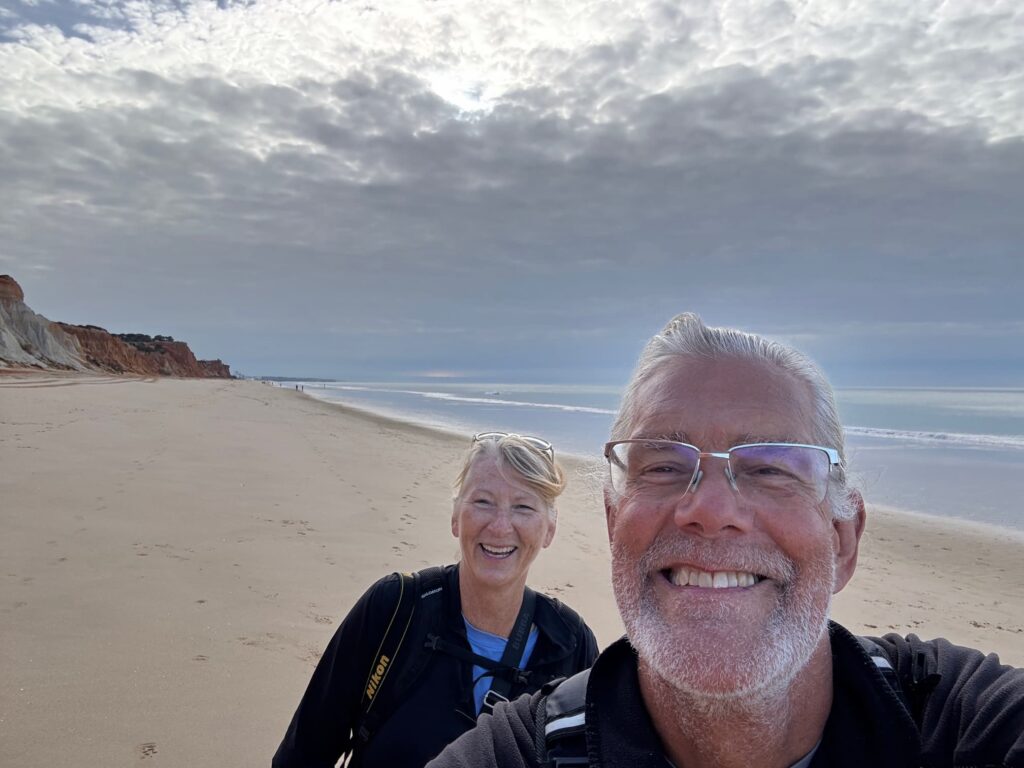
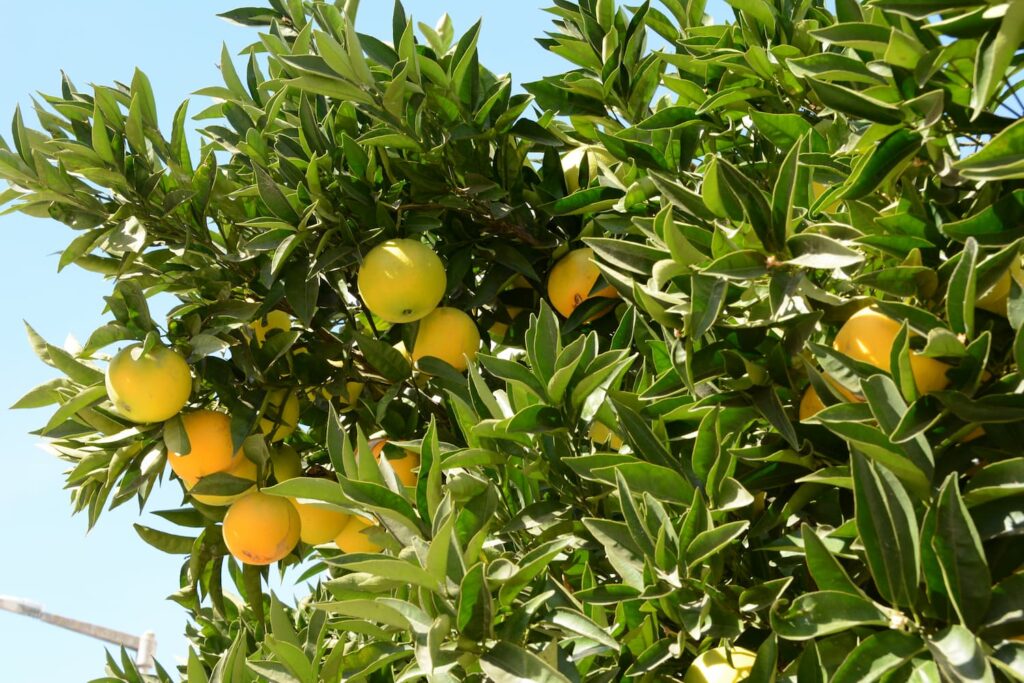
Some days we tour and explore. Other days we read or walk the beach. Simply picking a fresh orange off the tree in the morning, is a task worthy of crossing off a to do list if you’re so inclined. Welcome to the wonders of slow travel.
What began as a five day accommodation credit from last years cancelled Camino, has turned into a new travel experience – an experiment in slowing down, the gift of having a home base, and letting serendipity guide our days in Portugal’s Algarve.
Staying put
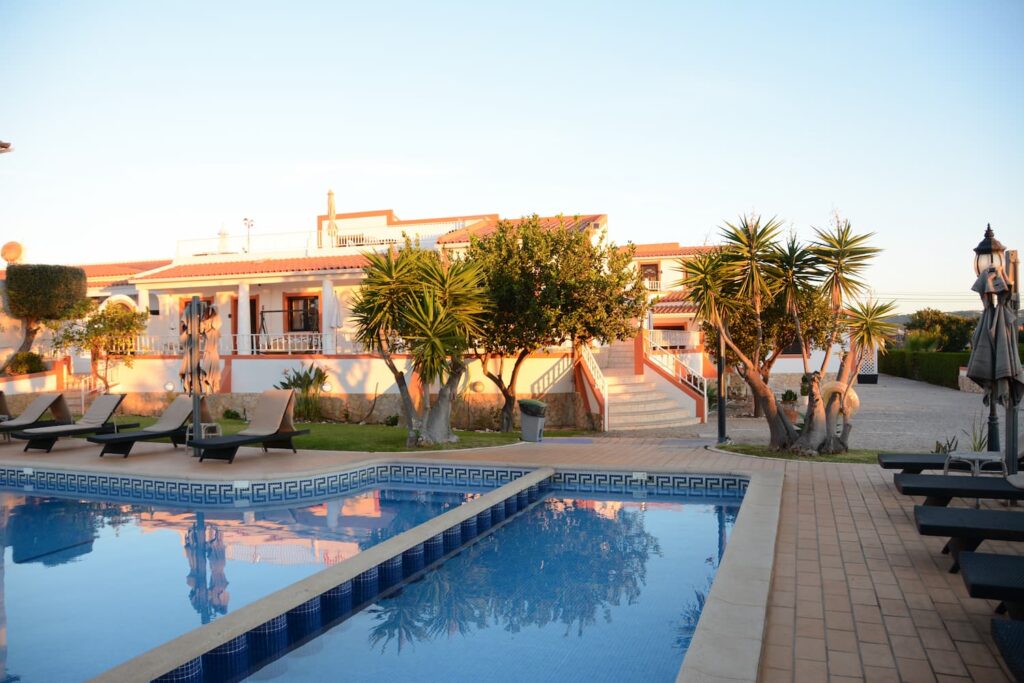
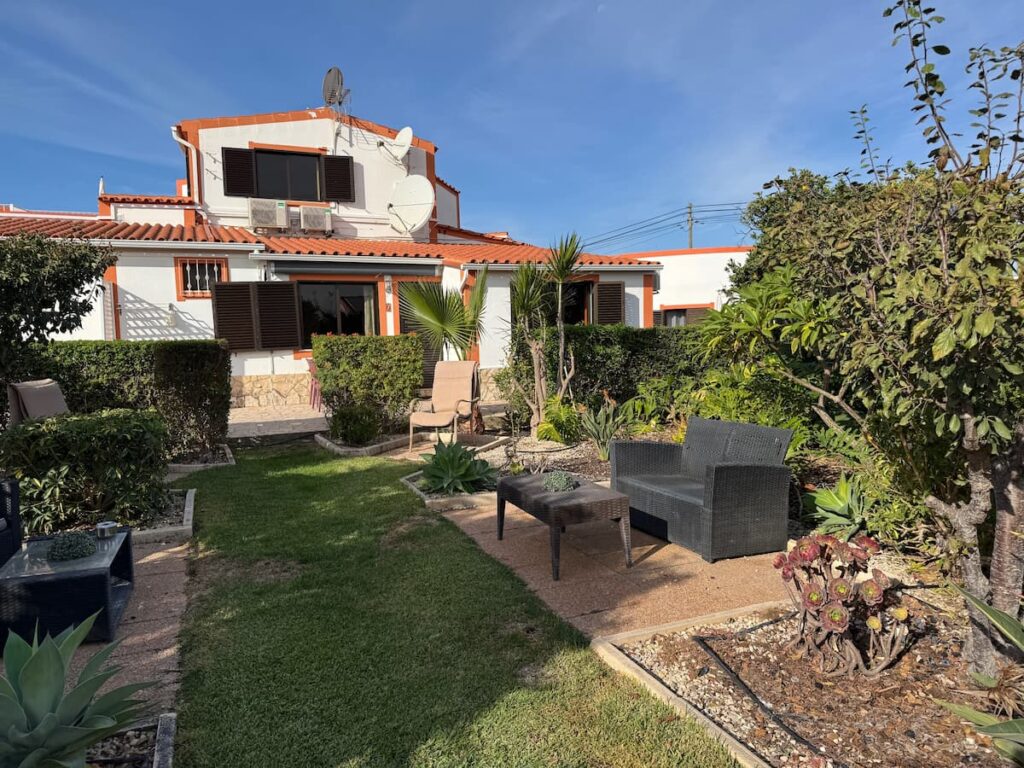
Once realizing our original booking was an absolute find, we extended our stay. Casa da Horta is a collection of villas on a former orange grove, just outside Albufiera. It’s central for exploring the Algarve, away from the resorts and traditional tourist areas, but close to local shops and an easy walk to the beach. Norberto owns the property. He was born here, on the family farm. When he inherited the land as an adult, he converted several buildings into separate apartments. Over time he added more units, now 14 in total. They’re all unique and fully equipped, sharing a common courtyard, pool, BBQ, landscaped grounds and recreation for both kids and adults. Some of the original orange grove remains, and the fruit is ripe for the picking in the fall during our visit.
Supporting local
Casa da Horta is owned by a local, employs locals, and revenues go directly back into the local economy. The same cannot be said for foreign owned properties and large brand name resorts in the Algarve. As responsible travelers, we are happy to support local businesses.
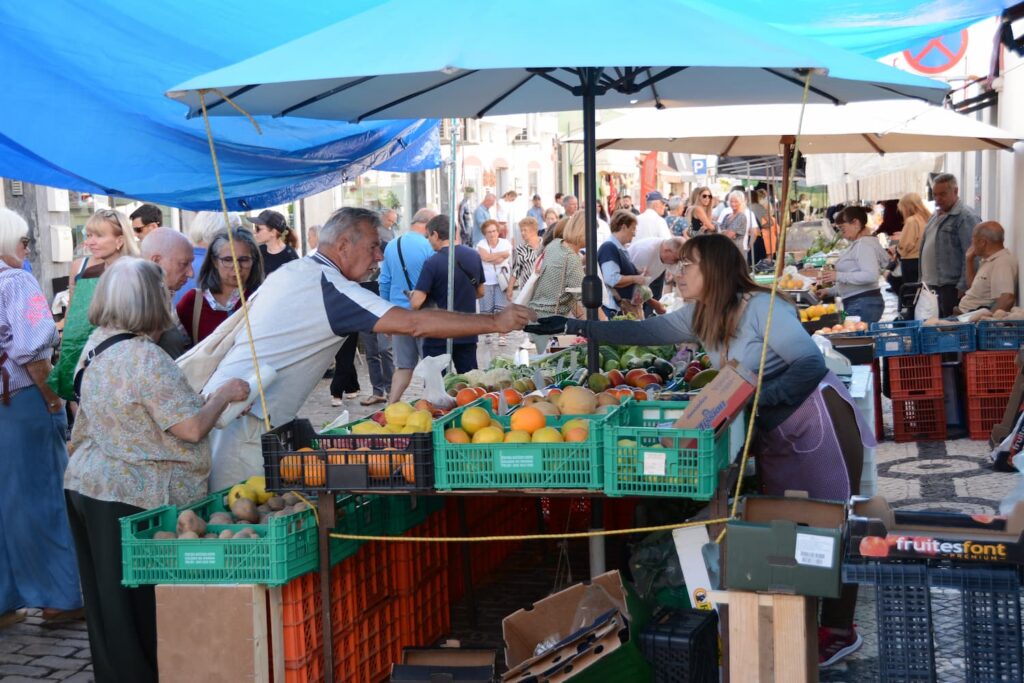
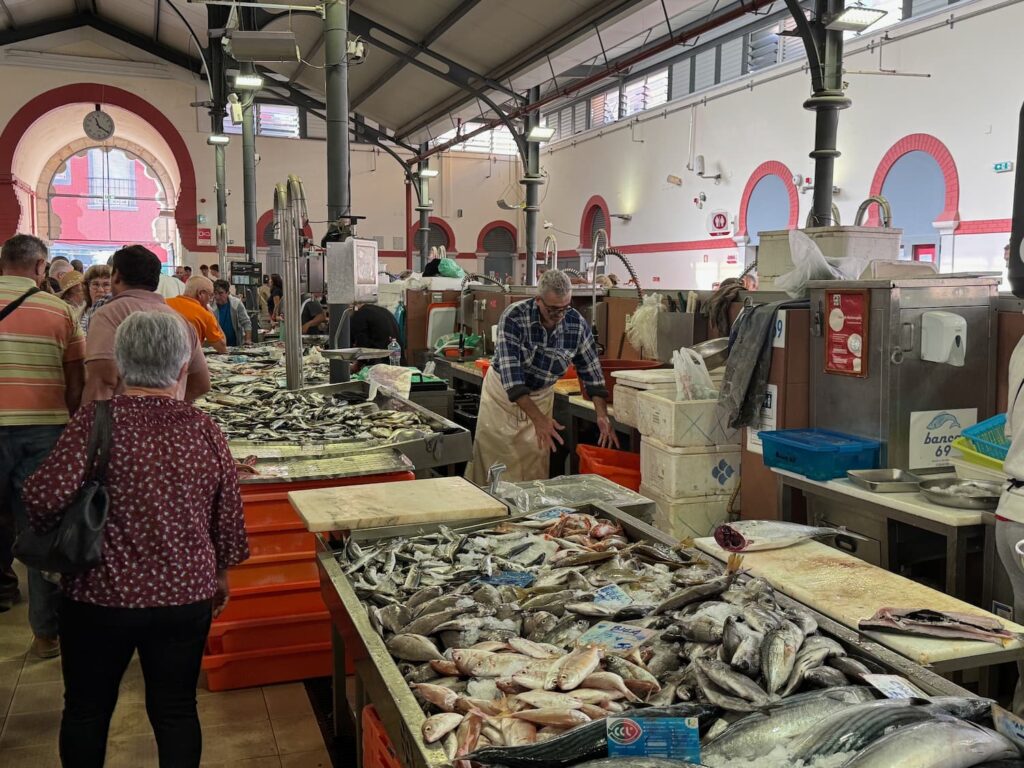
Being able to prepare meals has meant we shop locally. We’ve discovered the Saturday market in Loule, with its eye popping selection of local fish and seafood, in addition to fresh produce. I’m on a first name basis with the check gal at Intermarche in town. She knows I’ll be picking up a bottle of wine and some cheeses from the deli, paying by tap. Though my Portuguese is limited to a butchered version as it appears on Google Translate, she still smiles at my attempts.
Unexpected local discoveries
I’m navigating round-abouts with ease now. It’s no small feat for someone from North America, challenged to sort through right of ways and exit protocols in multi-lane circles. But I am now convinced roundabout efficiencies are the solution to traffic snarls back home.
We’ve discovered fields of pomegranate trees on the way walking to the beach. With fruit hanging over the roadside fence it’s an inviting snatch we justify, rather than leaving it to fall to the ground, in a field of plenty that appears unharvested. We also discover pear trees on our walks. For someone used to picking fruit from the grocery shelf rather than the branch, it’s a vitamin C feast.
We visit various Algarve towns – Albufeira, Faro, Tavira, Alcoutin, Sagres, Loule, Silves, Lagos, and Costa Vicentina, not as a hit list from a travel guide, but as individual days excursions. The pace unhurried, researched with recommendations from locals, not influencers elevated in the feed.
Old towns, ruins and wineries
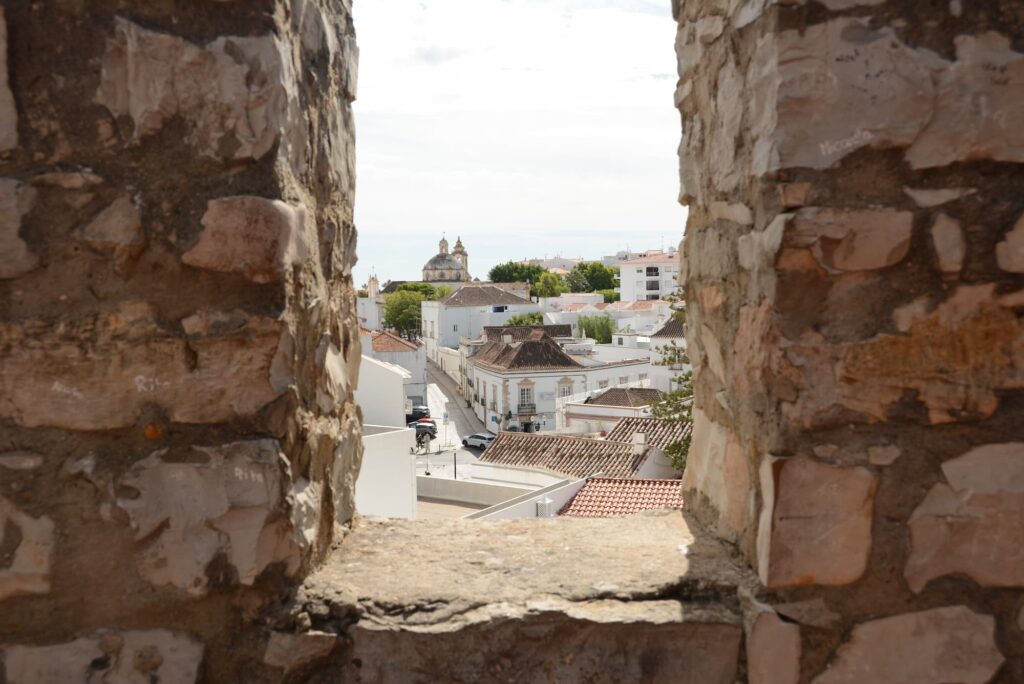
We visit walled old towns, castles and countless ruins. Sometimes these trips are the primary focus for our day, other times they are tacked onto a return trip from the market or a winery.
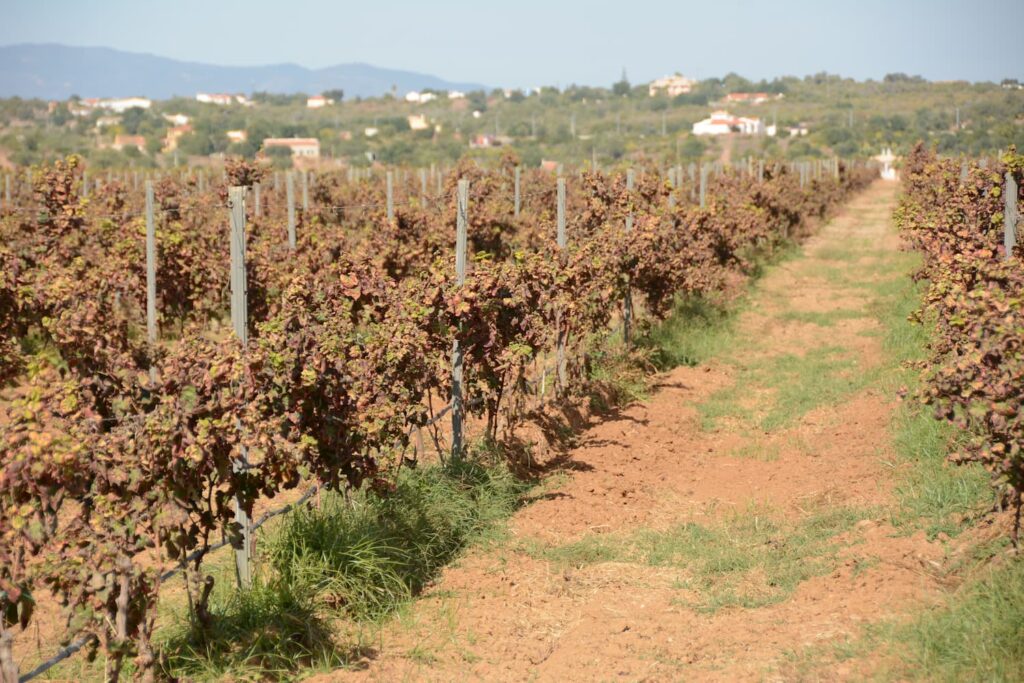
Check out winery tours and Tasting HERE We spent a fabulous afternoon at Cabrina Winery in Silves.
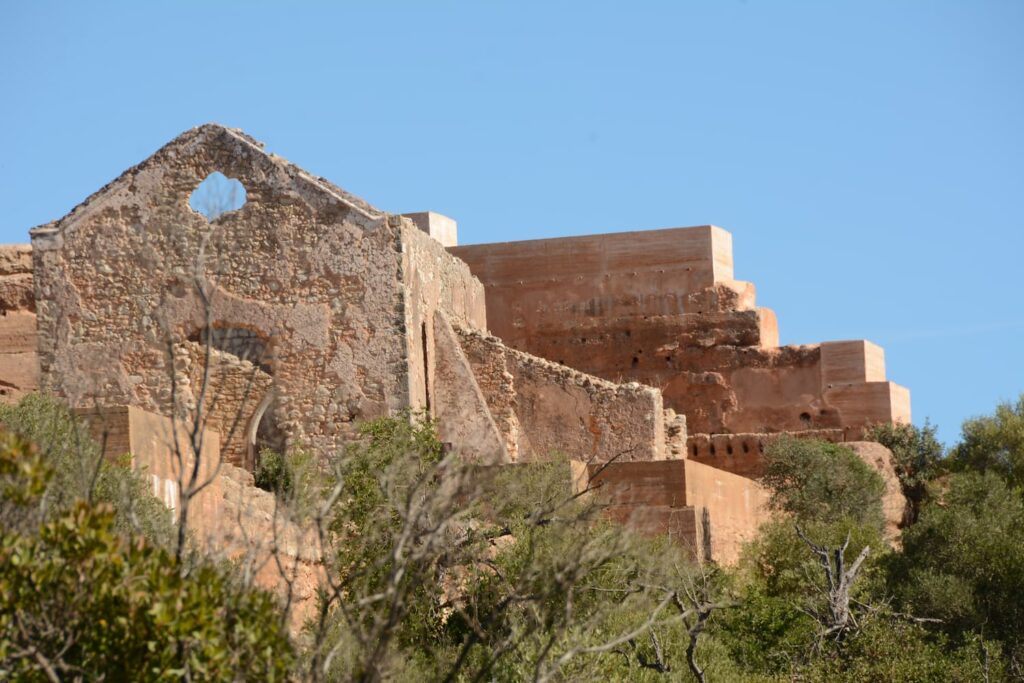
A benefit of shoulder season travel is that we are often the only people rummaging around these ancient ruins dating back to the 12th century Moorish times.
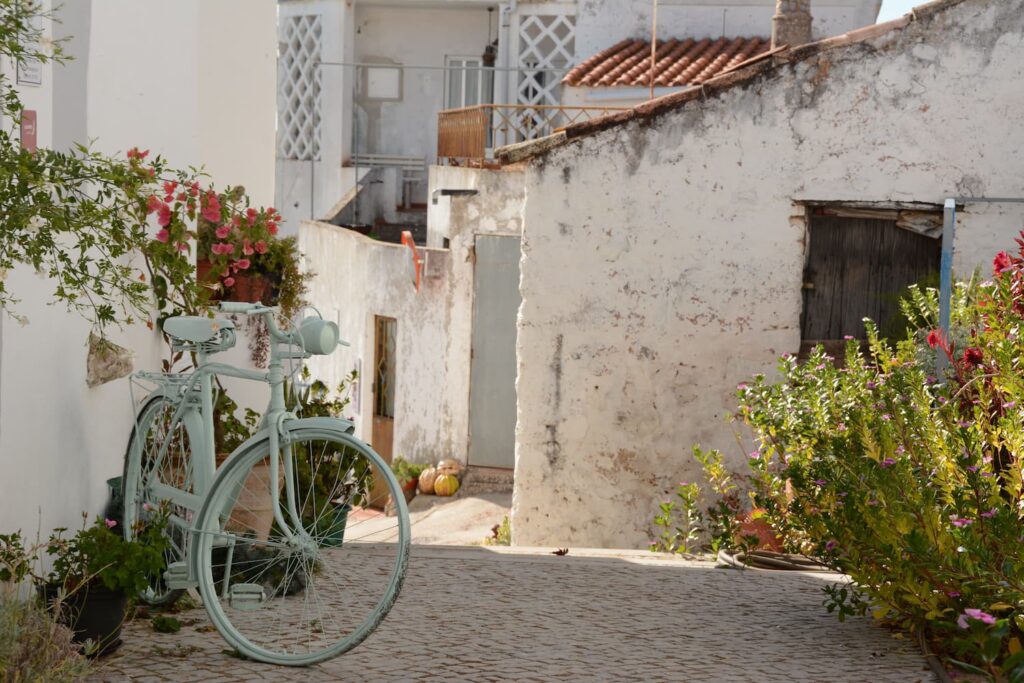
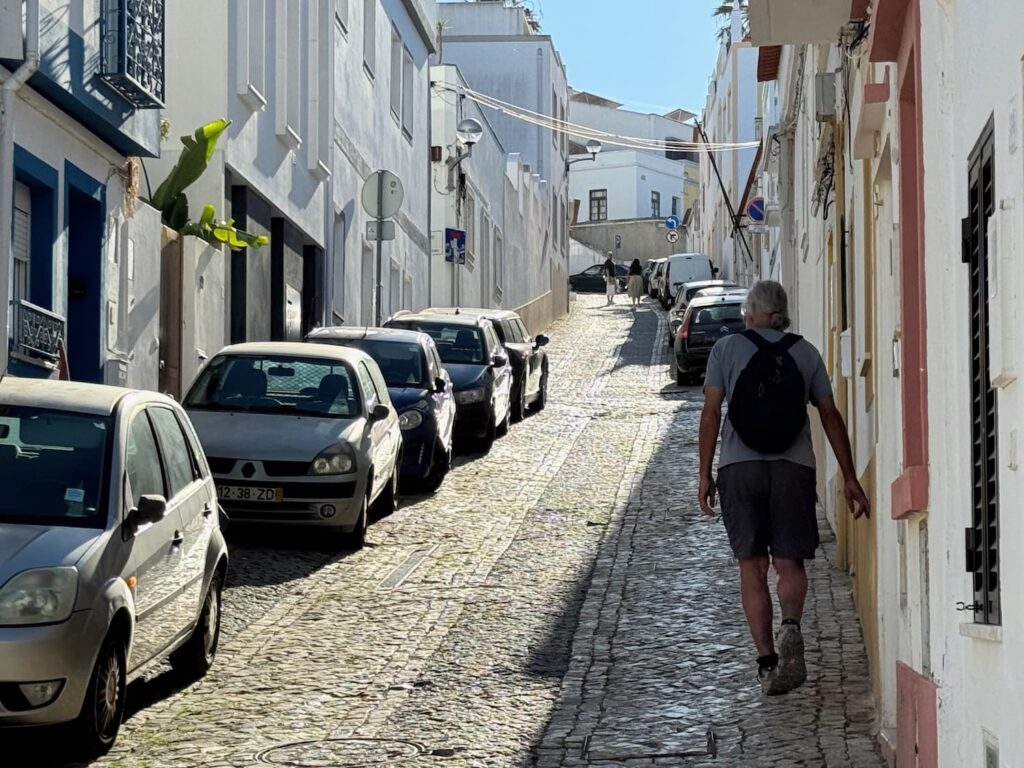
Hill side villages too, are absent of tourists. The cobblestone streets there, worn from centuries of locals living day to day, not tourists pouring out of a tour bus. Slow travel allows you to venture beyond the usual scope of arranged tours from the central coast.Hiking in
Day hiking in the Algarve
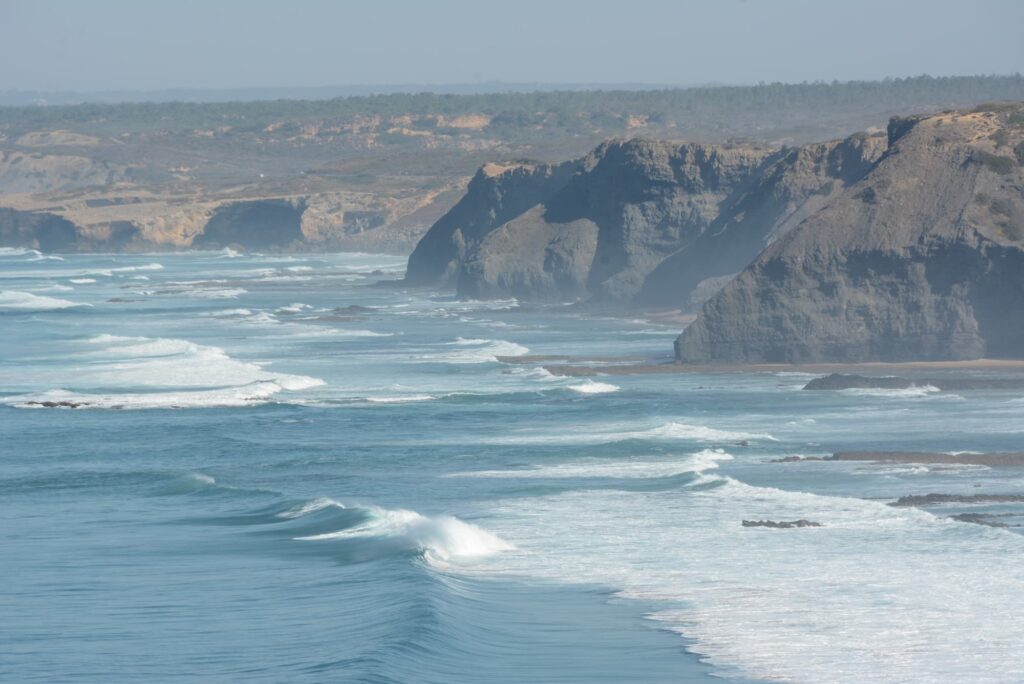
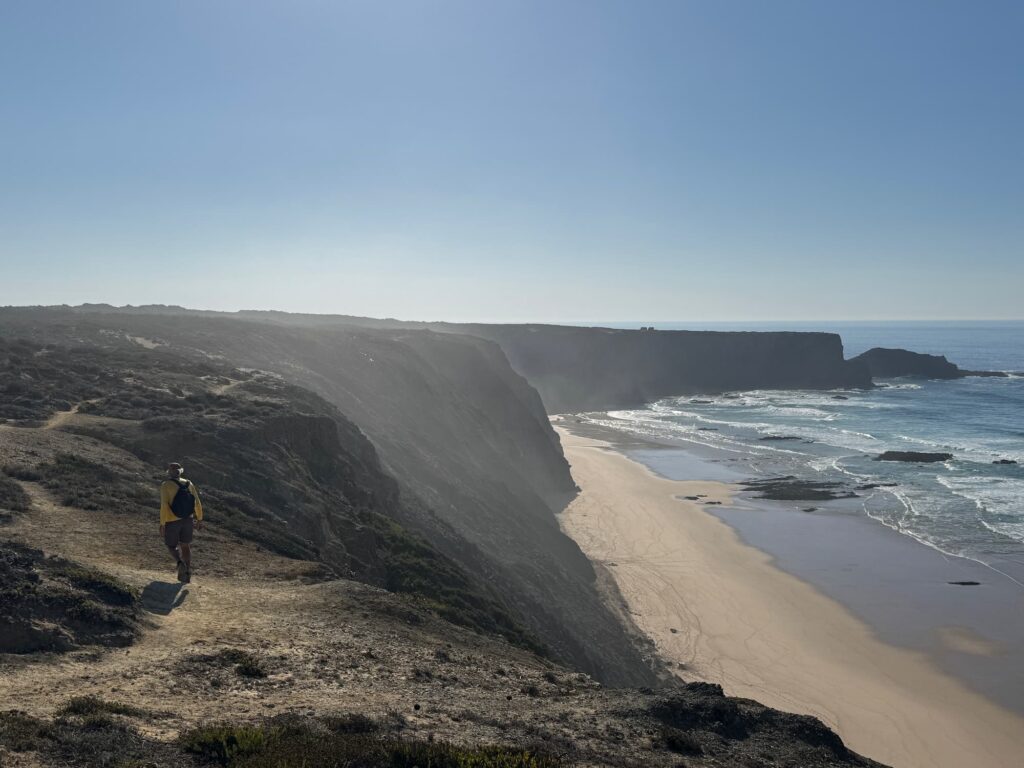
We’re avid hikers, and savour the conversations with locals and through hikers we meet along the way on both the south coast and the west coast of Fisherman’s Trail. Doing day hikes along trail stages allows us to experience parts of this iconic 226km trail, while also enjoying the comforts of our own bed each evening. Yes, when you slow travel in the Algarve, you begin to refer to the bed at your accommodation as your own.
It’s about the people you meet
We’re not alone in our slow travel style. We meet others at Casa da Horta who have chosen to stay a while. Wolfgang and Barbara from Germany. Or more specifically, East Germany’s former socialist state the GDR. They are quick to note this distinction, proudly telling us about life before the wall came down, and the time since. Wolfgang and Barbara are both retired engineers, road tripping for the last month. We meet each day at sunset on the roof top deck, sharing the days exploration, stories of international travel, and world affairs. Their lived experience in Europe provides a refreshing reframe to North American politics.
Our next door neighbour, a term I use with endearment, since its clear both of us aren’t going anywhere for a while, is Chay. He’s a former US Vietnam war vet, now married to an Irish veterinarian. He’s lived in Whales for the last 20 years, and is a regular long stay local in the Algarve during the shoulder season. His wife who still works, joins him occasionally. Chay is an old time rocker and music fan, planning travels around Bob Dylan tours. When on tour, he and his wife attend every single concert. It’s how they met. They’ve done Stevie Wonder and Van Morrison too. We immediately bond over a familiar music genre.
At 80, Chay doesn’t look a day over 60, and is a real character. We learn his dad was business partners in a Cuban hotel before it was nationalized during the revolution in 1960. Unmistakably proud of his Italian heritage, he whispers from behind a hand masking his mouth, “listen, it’s not like we’re part of the mob.” I believe him. I think.
Tapping into local politics
Through Chay, we learn about a controversial major project coming to the central Algarve: a water de-salination plant. Meant to ensure long term fresh water supply, learning about the off shore dredging and its impact on fisheries ecosystems, becomes an unplanned activity, as we tour the excavation of two meter wide pipes, and chat to locals about it on our walk the following day.
We learn that these conversations, unexpected encounters, and unplanned detours actually became part of the holiday itself.
Sun, sand and surf
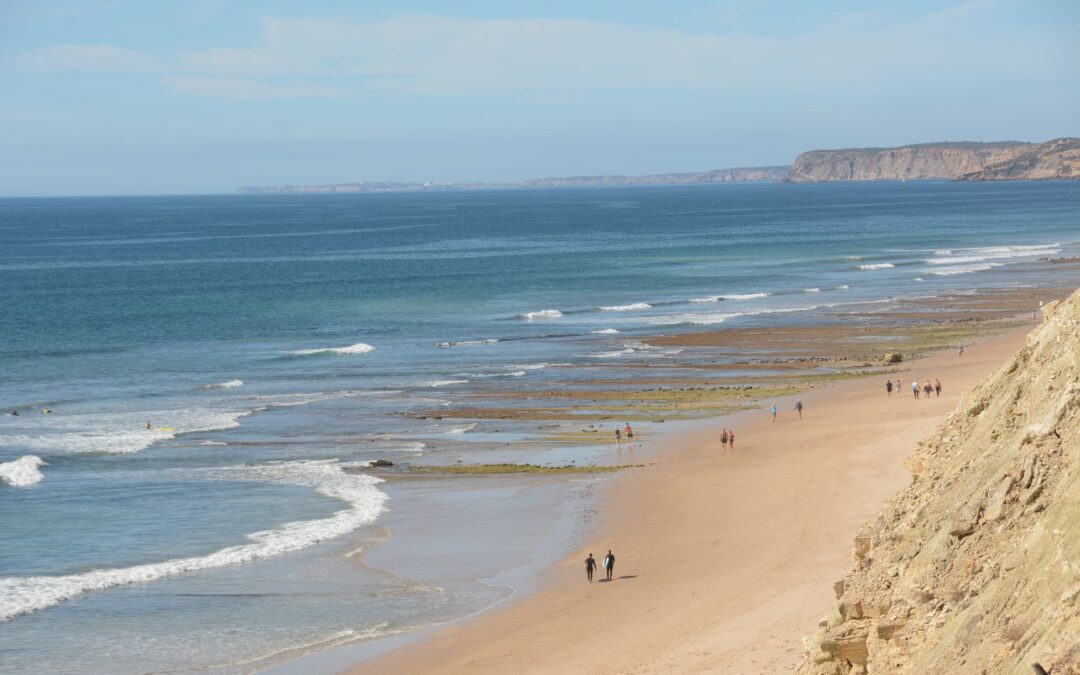
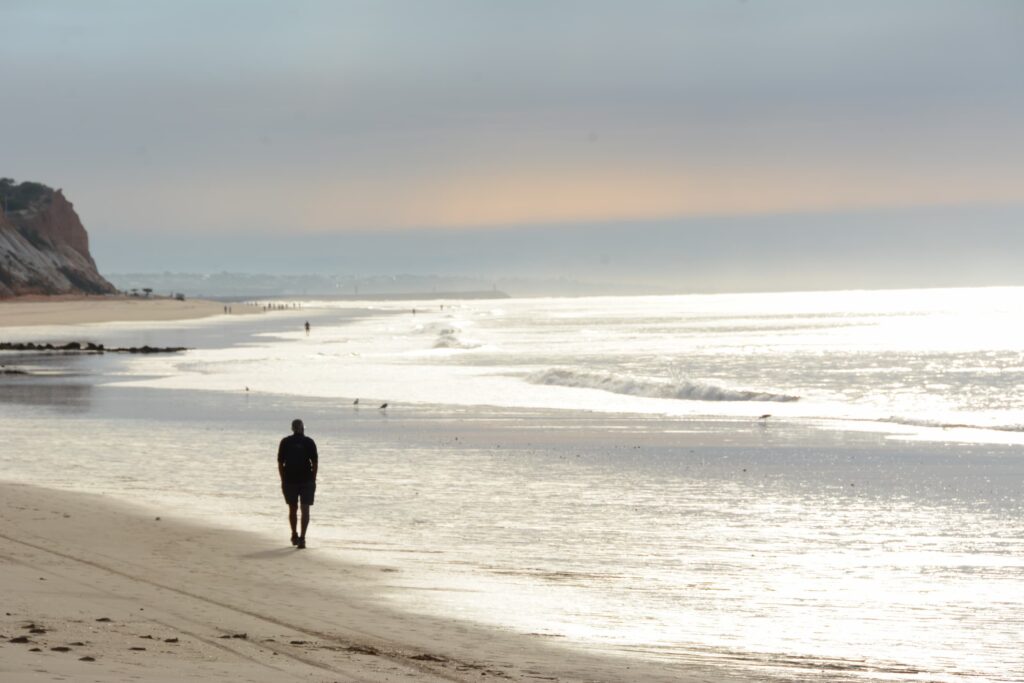
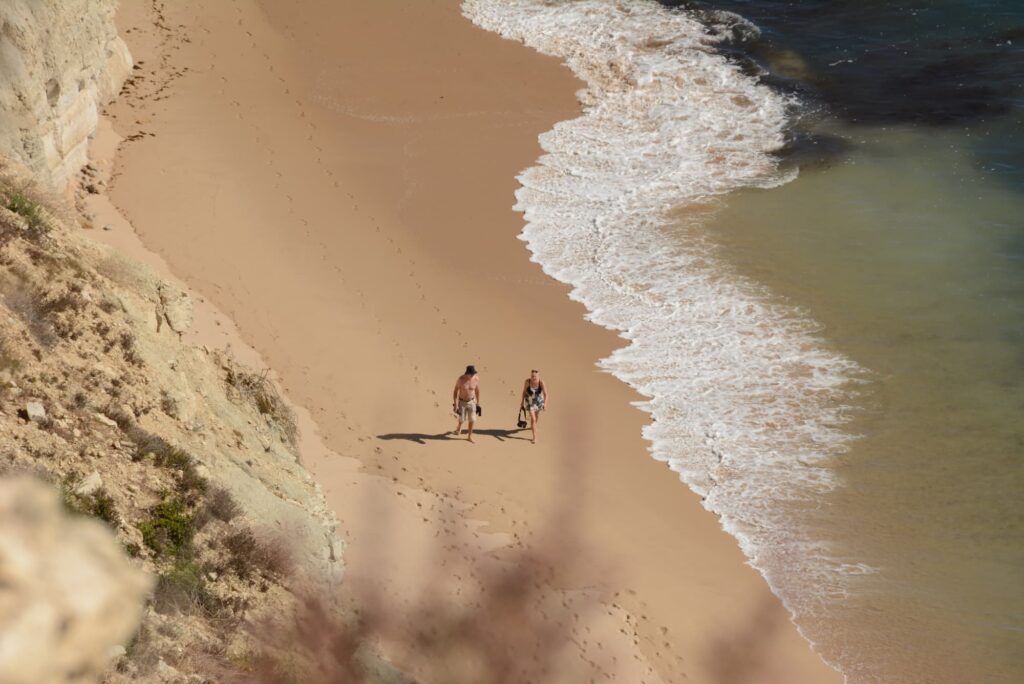
Of course the beach calls on many days in the Algarve. Sometimes for a sunrise walk, other times for an afternoon swim and sun. But never as the only thing to do, rushing down daily from a cliff side resort, as so many do during their short vacation stay.
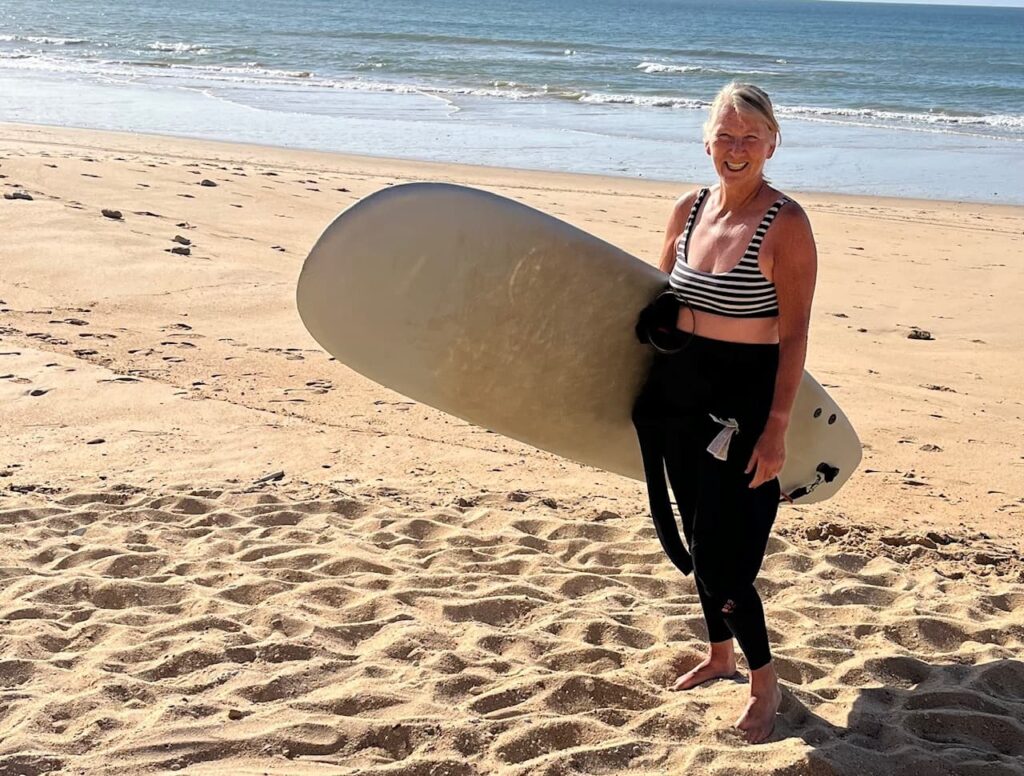
And for me at least, the beach offers the promise of surfing. Not particularly well, but hope springs eternal. It’s as though adding to the number of countries I’ve surfed will somehow make me a better surfer. This is about as competitive as my travel check list becomes during our experiment in slow travel.
Sketching
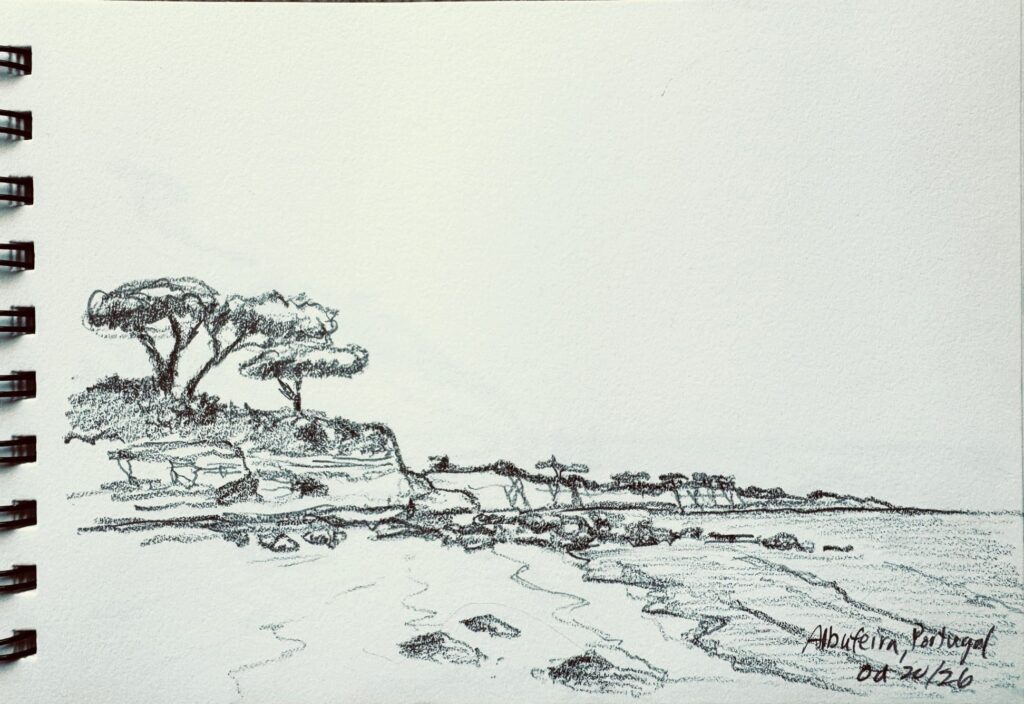
Sketching is a great way to slow down long enough to observe surroundings fully. The trees, the cliffs, how the waves lap the beach in rhythm. I’ve found it is not only the visual world which gets a keener eye while drawing, but all senses become heightened. Suddenly the sound and scent of the ocean is amplified, and the warmth of the sun and breeze becomes amplified.
The rewards of going slow
The Algarve rewards those who go slow. Slow long enough to notice the rhythms of weekly markets, where locals eat, and the cafes where only Portuguese is spoken. Slow long enough to venture beyond the central coast, into hillside hamlets, to the fringes of the wild west coast, or small border towns with Spain, where tourism has scarcely touched down. And slow enough to chat to local fisherman, or notice a cat curled up by 12th Century ruins!
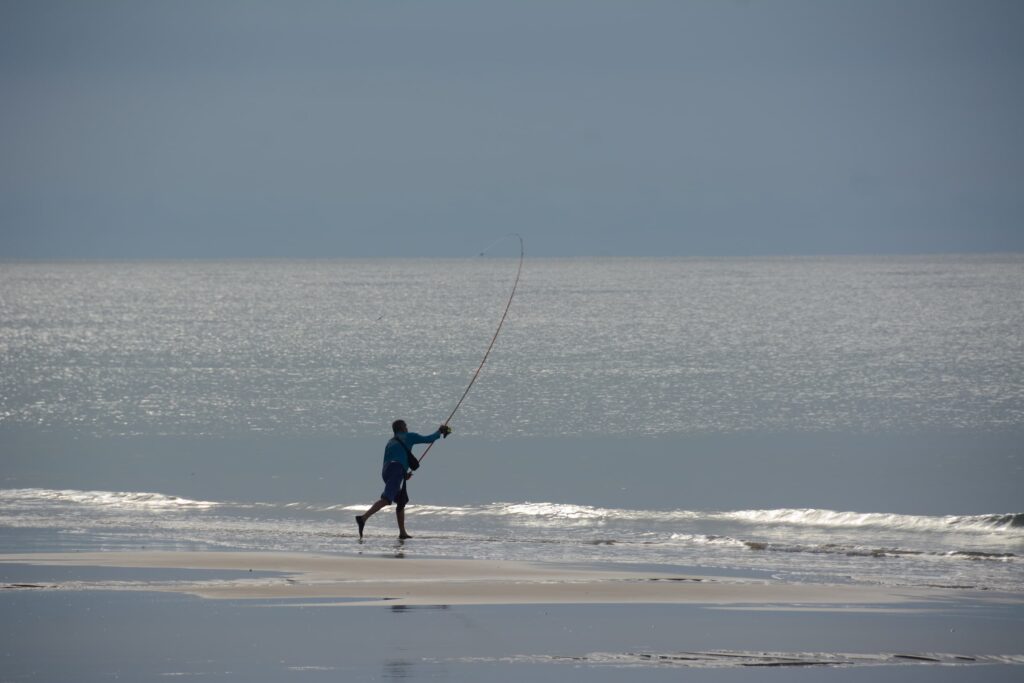
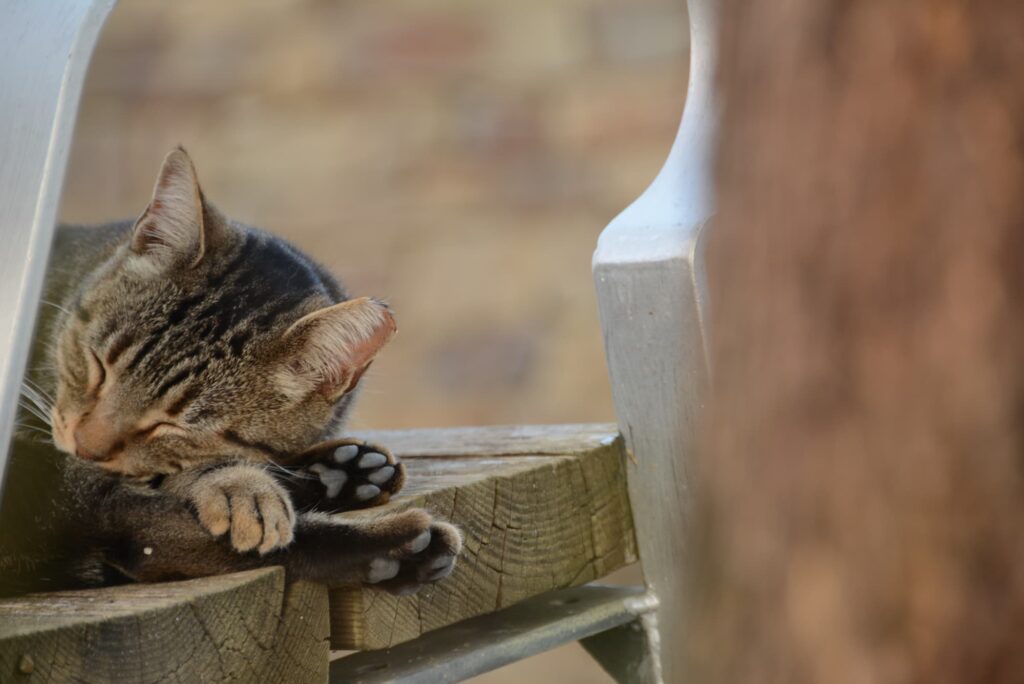
We created experiences that a rushed itinerary rarely reaches. And we’ve returned with a handful of places that feel like our own discoveries, not a phone full of photos from famous viewpoints.
Our travel in southern Portugal was less holiday, and more a place to be, live, meet new people and explore. Slow travel in the Algarve at its best. It was a worthy experiment.
Shoulder season
September – October is considered shoulder season in the Algarve. We found October weather to be great for cliffside hiking, swimming, beaching, and surfing. The autumn harvest was at its prime and wine tasting plentiful. Castle exploring, old town touring, cobblestone street hopping, and hill side village ambling filled our days when the beach wasn’t calling.
Early should season March – April also holds the promise of fewer crowds. While rain can dampen the day of any shoulder season travel, daytime temperatures usually remain warm, but the evenings cool. Of course if you’re willing to adjust your expectations, winter in the Algarve offers its own delights: more rainy days, mixed with temperate climate and some treasured sunny days, few tourists, and mostly locals or long stay visitors escaping norther European cold.
Dive deeper into extended stay activities
For a deeper dive into how to spend slow travel days during an extended stay in Portugal’s Algarve, check out these posts
Three cliff Hoping Day Hikes in the Algarve You Will Love
Where to stay
Check out this map of Algarve accommodations for options in the area.
If you’d like to learn more about Casa da Horta, the lovely place where we stayed, link to it HERE.
Algarve tours
We love the concept of self-guided touring. Informed by guide books and writers who have experienced the region personally, we love to explore and discover on our own. But there are times when an organized tour makes sense – be it for access, language barriers, or simply ease of ensuring you see or do something you had your heart set on. So with that as the framing, here are some options you may wish to explore.
Winery tours
Link here to search for winery and sampling tours. This is how we found our tour of Cambria Winery near Silves, and we loved it! The tour included an overview of the winery’s history, a tour of the property and vine fields, the processing area and barrel cellar. The tour was followed by generous sampling and a lovely charcuitery in a relaxed setting. On our tour it was just us and one other couple. The vibe was super low key, but incredibly informative, meeting participants at their knowledge level in a relaxed setting.
Activities
Link here to search for various Algarve tours and rentals. You’ll find easy access to e-bike rentals in Albufeira, kayak rentals in Lagoa, SUP rentals in Lagos, Ria Formosa Catamaran tours to the outer islands, and tours of the infamous Benigil Cave. This is just a sampling.
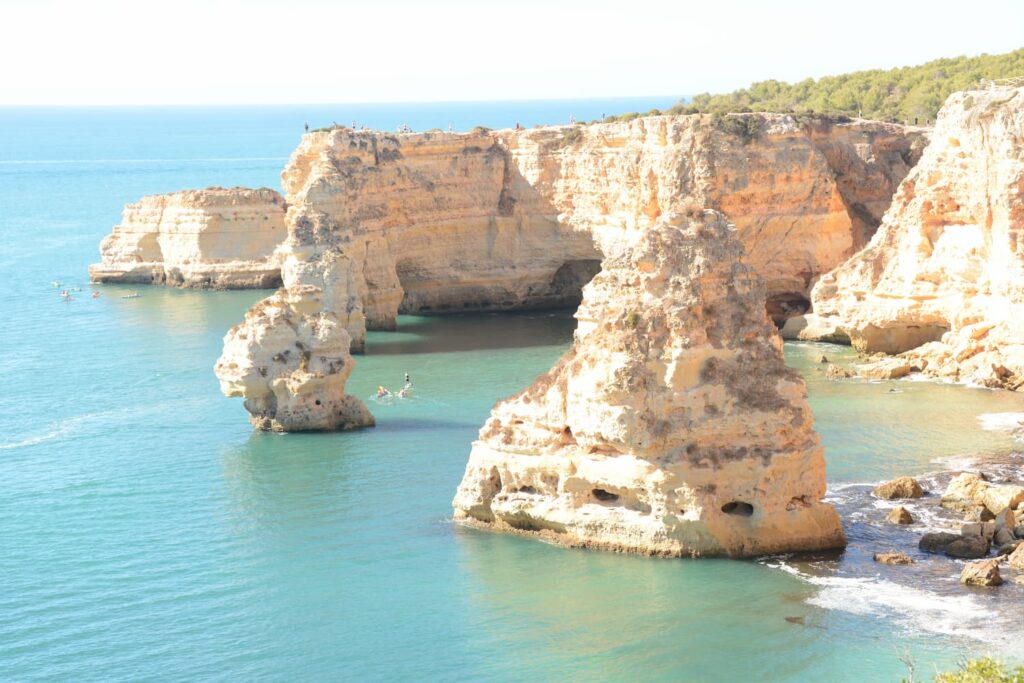
A fair warning: You may be joining the masses, depending on the tour. Absolutely need to see the legendary Benigil Cave while visiting the Algarve? You’ll find it here. For some, these tours offer a way to get out on the water, or do an activity they have always wanted to do – kayak or SUP in the Algarve anyone?
Just set your expectations, and prepare for the possibility of crowds, and at times “mass tourism” at scale, especially if visiting Benigil Cave. Even during shoulder season, while hiking the cliffs above, we witnessed an endless parade of tour boats, kayak and SUP tours clustered in the area.

Mary Charleson
Mary Charleson is an award winning travel writer and marketing/media strategist for 50+ adventure travellers. She publishes Carryonqueen.com and FiveMinuteMarketing.com. In 2025, Carryonqueen.com was awarded 2nd place for Best Self-Published Travel Website by Travel Media Association of Canada (TMAC). Mary also speaks to tourism leaders about marketing strategy and inspires audiences to explore.