
This post may contain affiliate links.
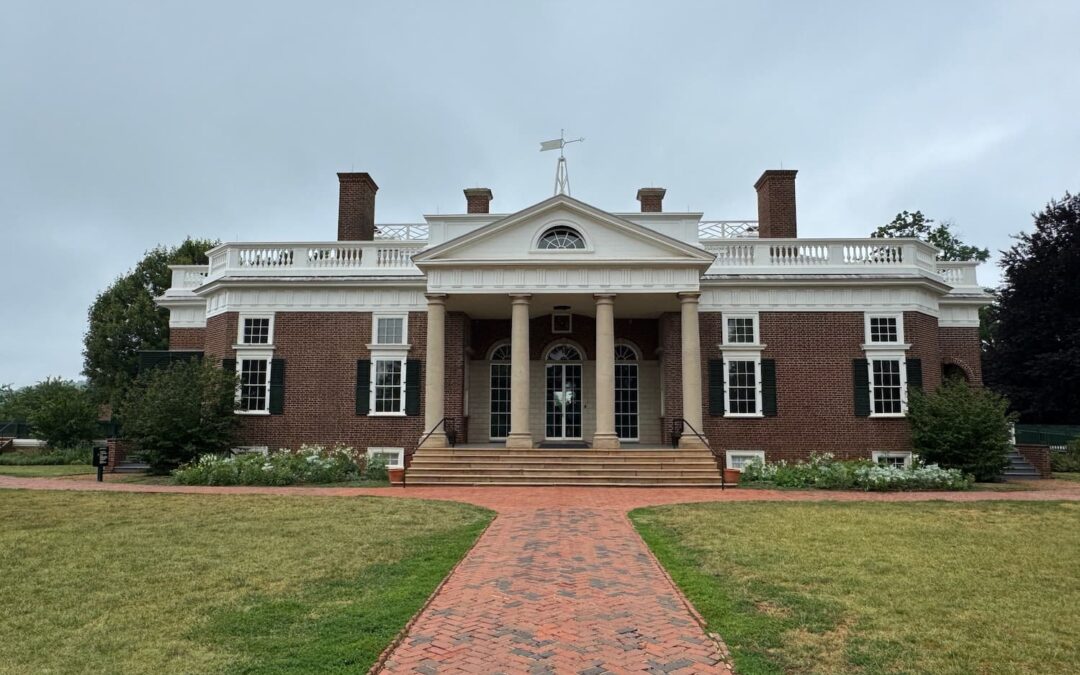
Is Monticello worth visiting? Absolutely yes! Whether you’re an American or international visitor as I was, Thomas Jefferson’s mountaintop plantation, located just out of Charlottesville, Virginia, offers interesting insight into American history. The property is deeply significant to the United States, plus it is a UNESCO World Heritage Site.
During my visit, as the only international guest in our group tour, I joined Americans who had made the pilgrimage from many different states. I met a school group from Seattle touring both Monticello and the nation’s capital in Washington. I witnessed parents impressing historical facts on their children, and adults recalling grade school learning, and in some cases re-framing what they had been taught.
It was fascinating to see history from an American perspective, since the fight for American independence had been framed mostly from the British side during my elementary school years in Canada. Thomas Jefferson would ultimately author the Declaration of Independence to form the United States of America and separate from British rule in 1776, and for that reason he is extremely highly regarded by most Americans. Monticello was his home. Visiting the property is about as close to walking in the steps of greatness and living history as it gets for many visiting guests.
America 250
Visiting Monticello during America’s 250 Anniversary gave a touch of poignancy to the tour. On one hand, gaining insight into the man that helped form the great nation of America was deeply moving, but also framing the fragility of democracy and values the country was founded on from a current political perspective was sobering. Unlike many other Canadians, I ventured to the USA during 2026, simply because I believe in the American people, and our friendship that will endure time, along the world’s longest unprotected border.
Overview of the highlights tour
Although you can purchase tour tickets at the main entrance kiosk, I’d recommended buying them in advance online to ensure a guaranteed time slot of your choosing. That said, tour groups leave every 15 minutes, and the operation is a well-oiled machine built for volume, coordinating groups through various parts of the estate property and house, without overlap.
There is an introduction film at the visitor’s center which runs every 20 minutes. It’s likely best watched prior to the tour, but there would be no harm in viewing it at the end if your time is rushed prior to the tour start time. Be sure to allow additional time for taking the shuttle bus up the hill to the residence where tours begin. It was suggested to me to arrive by 9:30am for the 10:15am tour. Learn more and book tickets here: https://www.monticello.org/
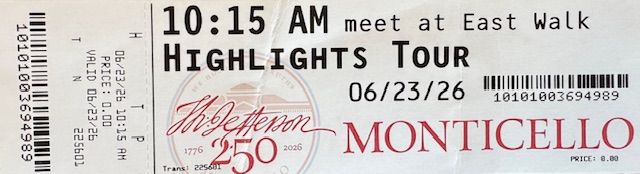
The Highlights Tour of Monticello
As a former educator, I’m a note taker at heart, so the following is a summary of tour highlights I found interesting. Your tour mileage will vary of course, and there are no doubt countless details I may have missed!
Our guide Sarah explained to us that Jefferson had inherited the plantation at the age of 14, and later entered politics at 25. By the age of 33, he was the primary author of the 1776 Declaration of Independence, and from 1801-1809 he was the third President of the United States. It was hard to not draw comparison to the current day for many in our group. Most of us nodded in agreement that we were hardly leaving our mark on history at the age of 33.
Monticello: a working plantation
Monticello was a working plantation, first used to farm tobacco, and later wheat. Although history remembers Jefferson as a great man of his time, he also enslaved people as skilled workers, builders, gardeners and kitchen staff at his residence. 130 enslaved people lived at Monticello at any one given time, and hundreds more passed through Jefferson’s ownership, being sold to owners in the south.
I was curious how my American tour group members viewed this historical fact. There were no Afro-Americans in attendance, which was a shame. But most seemed to accept slavery as an unfortunate time in their history which was eventually rectified. Few, including our guide, appeared critical of Jefferson for being a participant in slavery, since he was in the company of many others doing so at the time, and ultimately his contribution to America allowed him to rise above ill judgement.
Origins of the name Monticello
I asked Sarah about the meaning behind the name Monticello. She replied that it means “little mountain” in Italian. Jefferson had a deep love for Italian architecture, and the hill in Charlottesville where Monticello plantation was built had been a favorite place since he was a boy.
South Pavilion
After getting a little background on Jefferson and an overview of the property, our first stop was the South Pavilion.
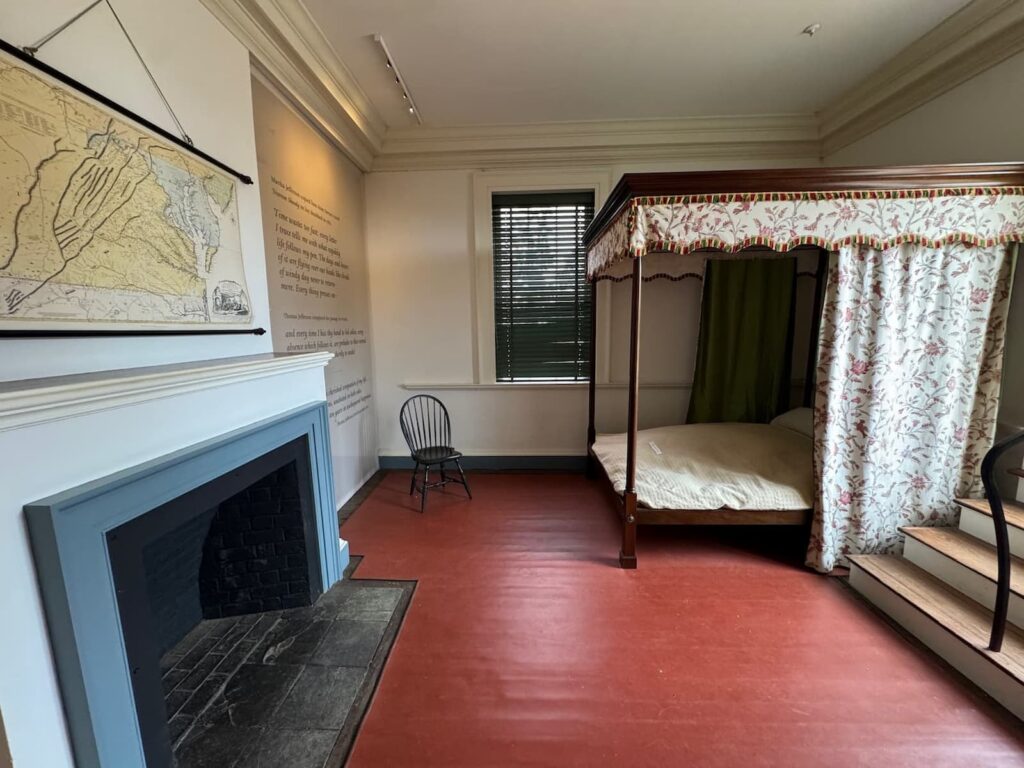
The South Pavilion was the first structure built in Monticello. Although Jefferson called it his “out chamber”, erected in 1770, it is also nicknamed the honeymoon cottage, as it is where Jefferson lived with his young wife Martha, and where his first daughter, also named Martha was born.

It was pretty cool to turn the same knob that Jefferson would have used to enter the South Pavilion.
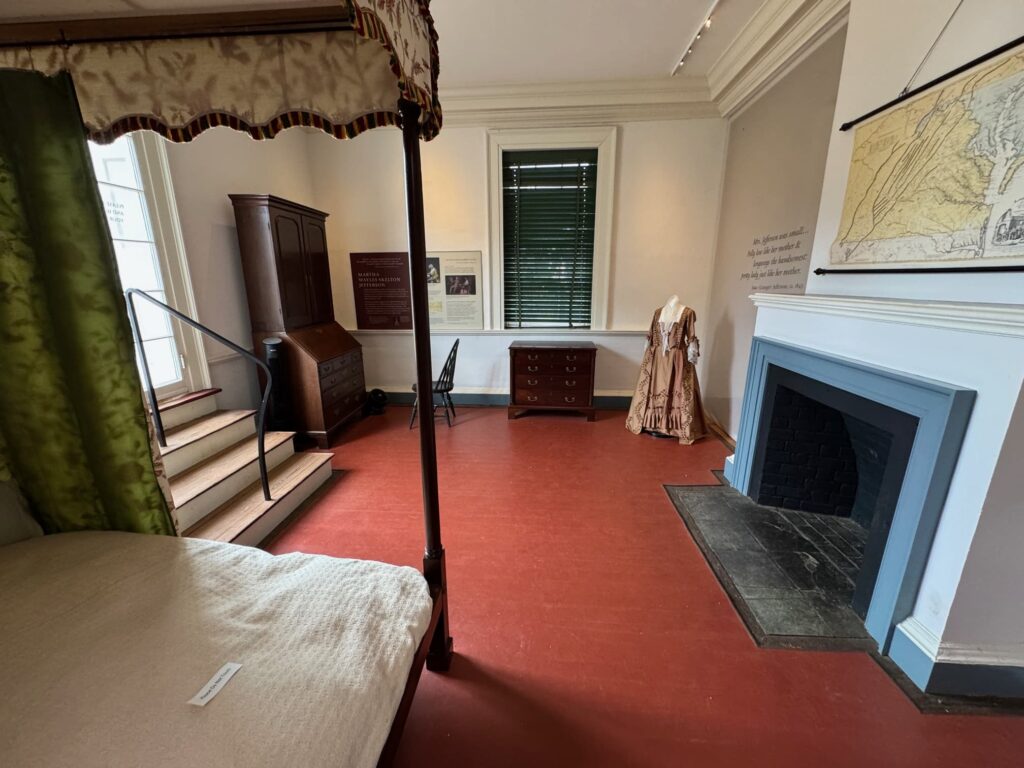
Martha Skelton was a 23 year old widow when she married Thomas Jefferson and came to Monticello in January 1772. For at least two years of their marriage, and after the birth of their first child Martha in September 1772, they lived in the one-room South Pavilion pictured here.
Later, Jefferson’s daughters stayed in the South Pavilion with their spouses and families when visiting while the main house was being renovated. After Jefferson retired from politics, the South Pavilion became a study, filled with law books.
North Pavilion
The North Pavilion served as a library during Jefferson’s time, and as an office for Thomas Mann Randolf, Jefferson’s eldest daughter’s husband, during the time she and her family lived at Monticello. In 1819 the North Pavilion was partially destroyed by fire. The structure was not open for observation during our tour.
The main residence
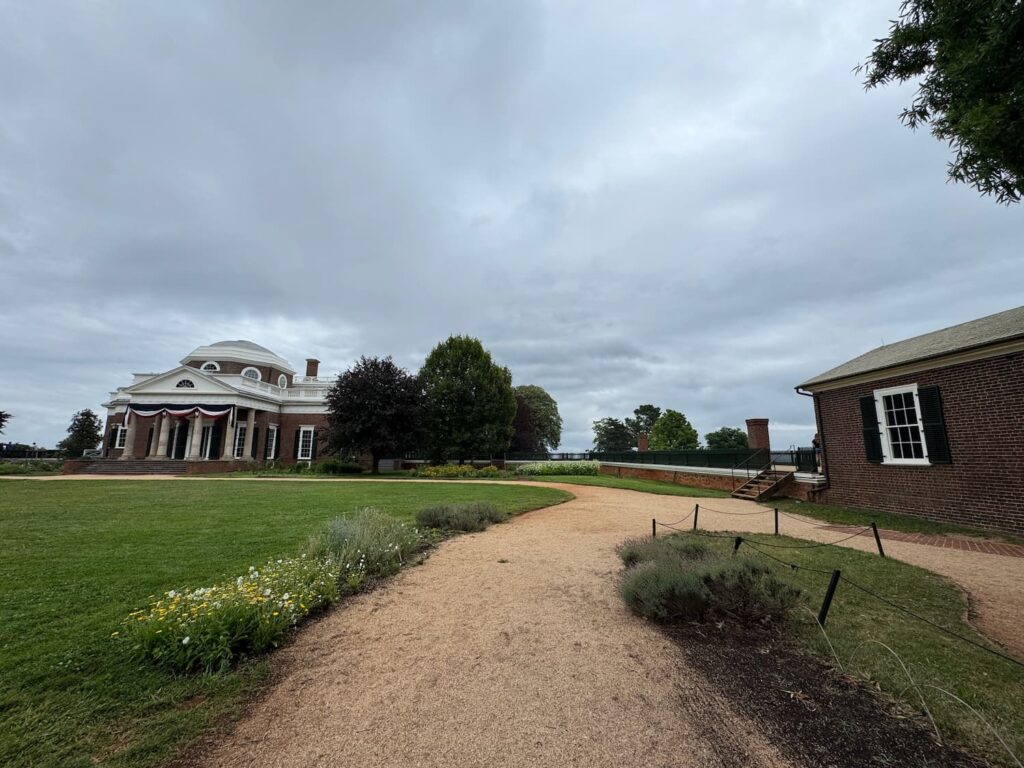
Thomas Jefferson shaped American architecture with his neoclassical designs for Monticello, the Virginia State Capital and the University of Virginia. He was a self-taught architect, studying classical architecture in his books and in France. Monticello, now recognized by UNESCO as a World Heritage Site, was Jefferson’s self-proclaimed “essay on architecture.”
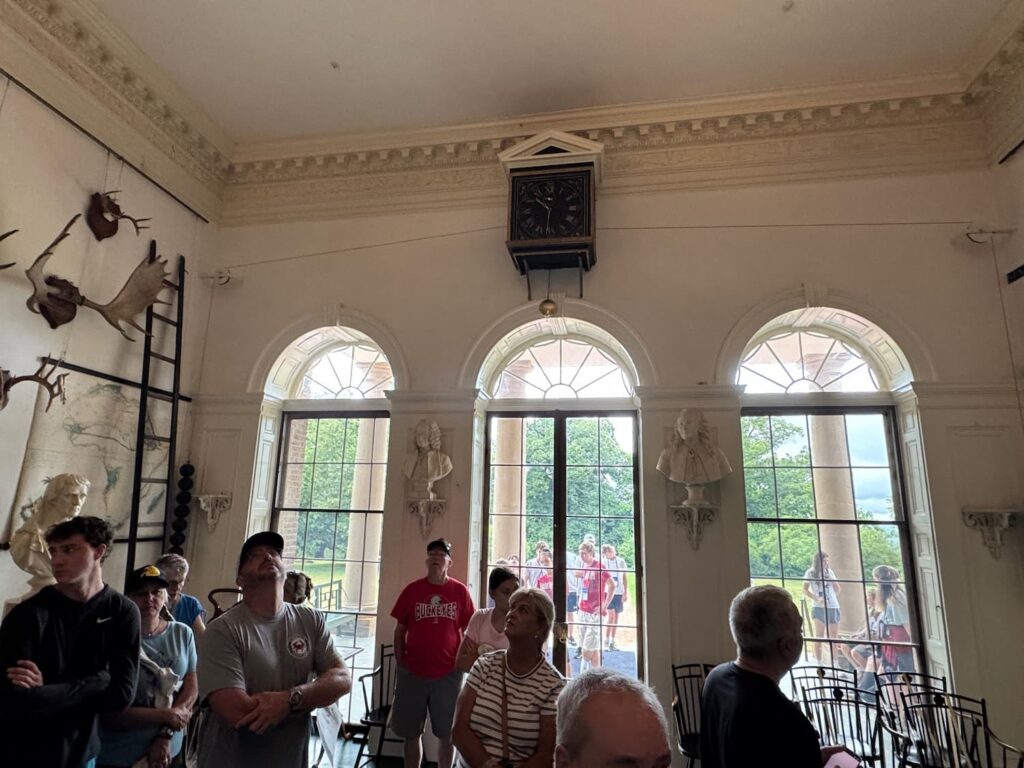
Jefferson had the site cleared in 1768, and produced the drawings and assembled a team of hired and enslaved workers to supervise construction. He spent more than 40 years designing, remodeling and enlarging the house at Monticello.
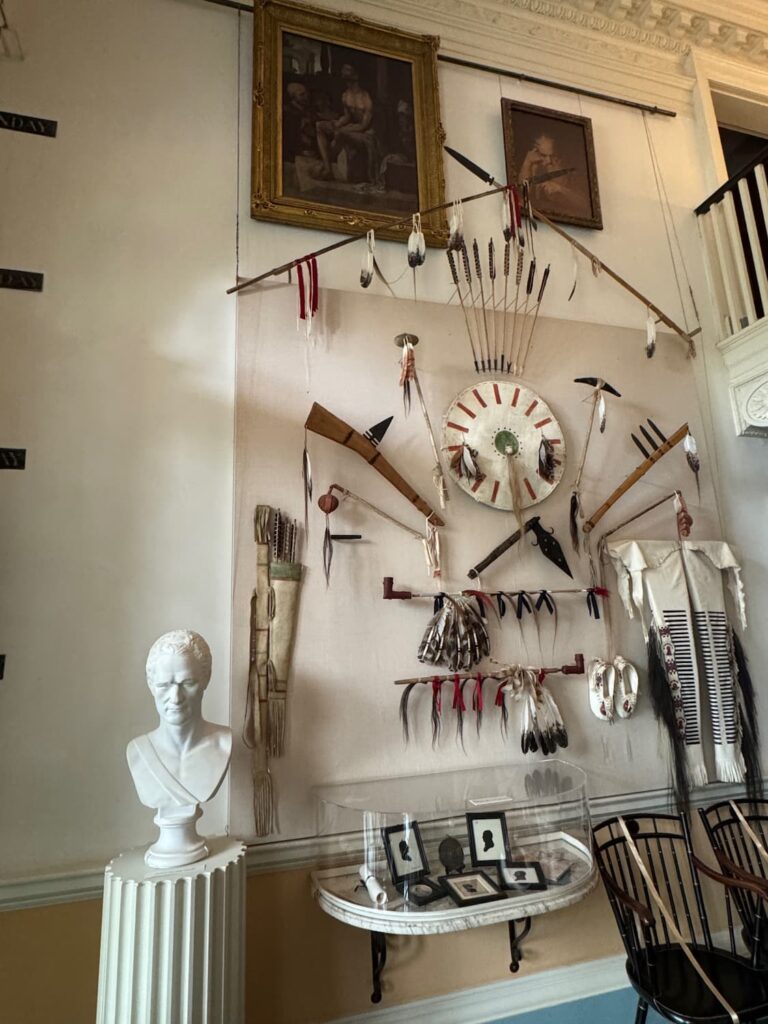
Jefferson’s years in Paris as the United States Minister to France (1784-89) marked a radical turning point in his architecture education. Previous inspiration came from books. In France he saw neo-classical public buildings and private homes, studied Roman temples and established friendships with architects and artists.
Upon his return from France, he embarked on expanding and transforming Monticello. Wings were added as well as an additional floor. In 1826, Monticello housed at least 14 people, spanning four generations, aged 2 months to 83 years old. The home also had to accommodate the traffic of enslaved servants.
A love of architecture
Jefferson loved classical and neo-classical architecture, reading and studying it independently. After the death of his wife, he went to France for five years, during which time he further immersed himself in the study of architecture, befriending artists and architects, and visiting many neo-classical residential buildings at the time. Jefferson built and rebuilt Monticello over 40 years. He loved the process of design, remodeling and rebuilding. Monticello was finally completed in1809, when he returned there to live full time after his presidency.
The study
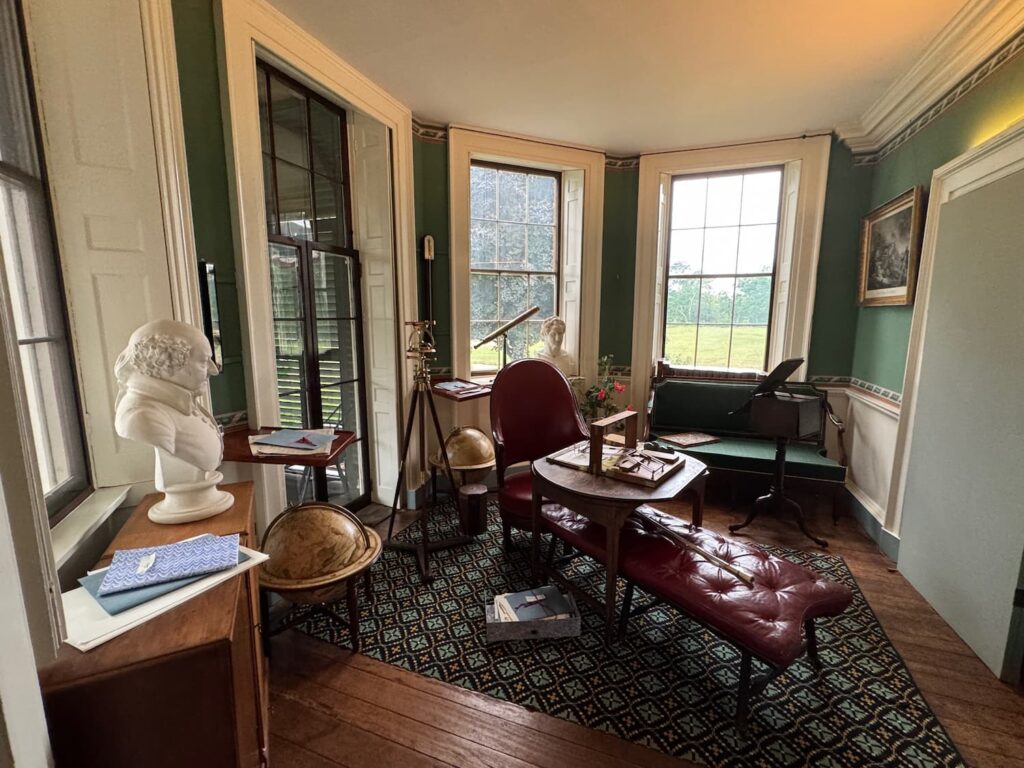
Affectionately labelled “Jefferson’s man cave” by our tour leader Sarah, the study/library was where Jefferson did much of his reading, study of architecture and design drawings. He was a man that loved invention and engineering too, tinkering with things he thought he might improve. For example, the polygraph two quill pen to make copies of everything he wrote, was on display in his study. As Sarah pointed out, “he didn’t invent the polygraph, but he made improvements to it.”
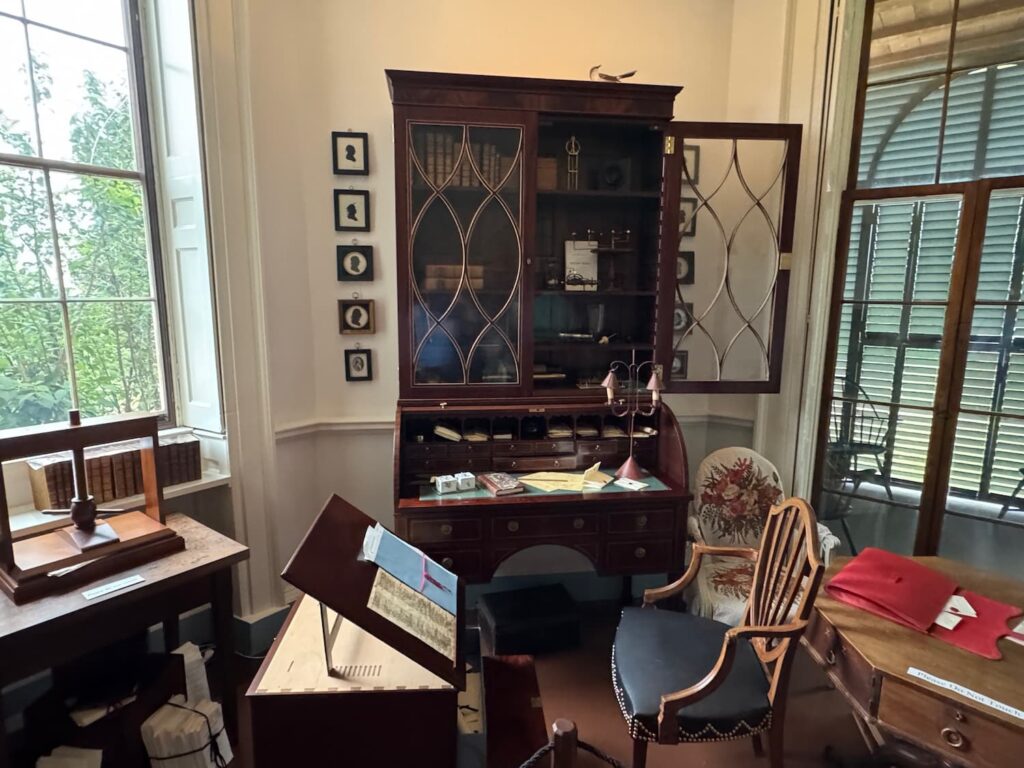
Jefferson also manufactured a pulley system to be able to close both glass dining room doors by pulling the knob of only a single door. The mechanism, built 200+ years ago, is still working today, as demonstrated by our guide when we entered the room. Jefferson was also rumored to have a mockingbird in his study – which explains the carved wood bird on top of the hutch. With his love of music, he taught the mockingbird to sing different tunes.
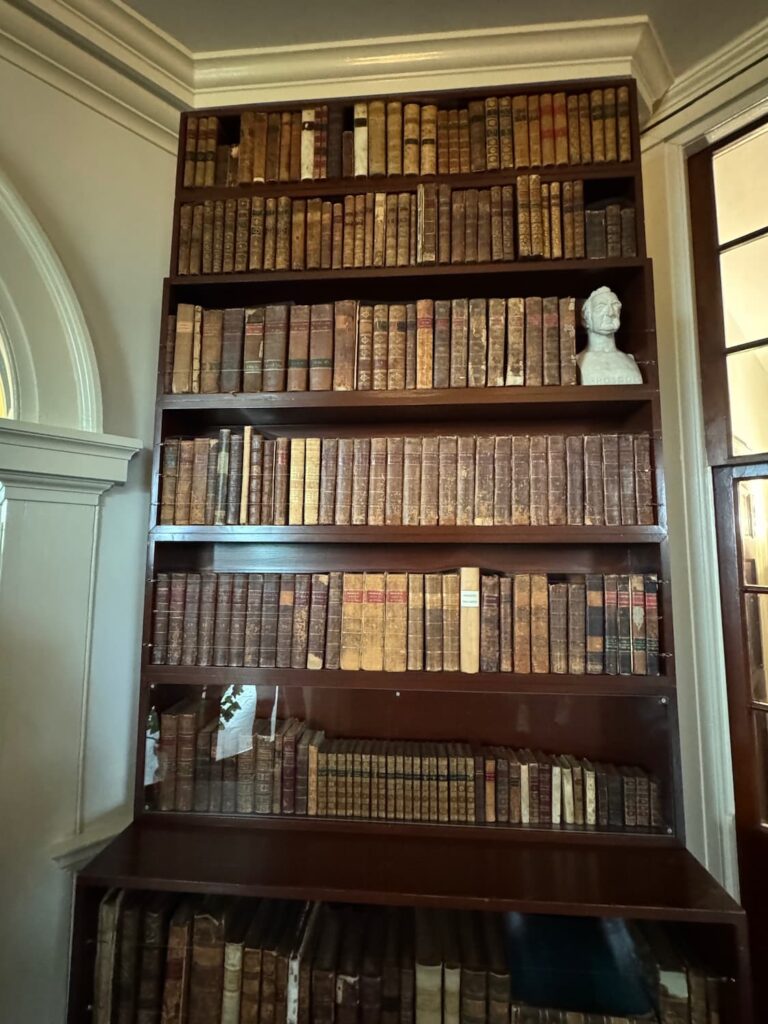
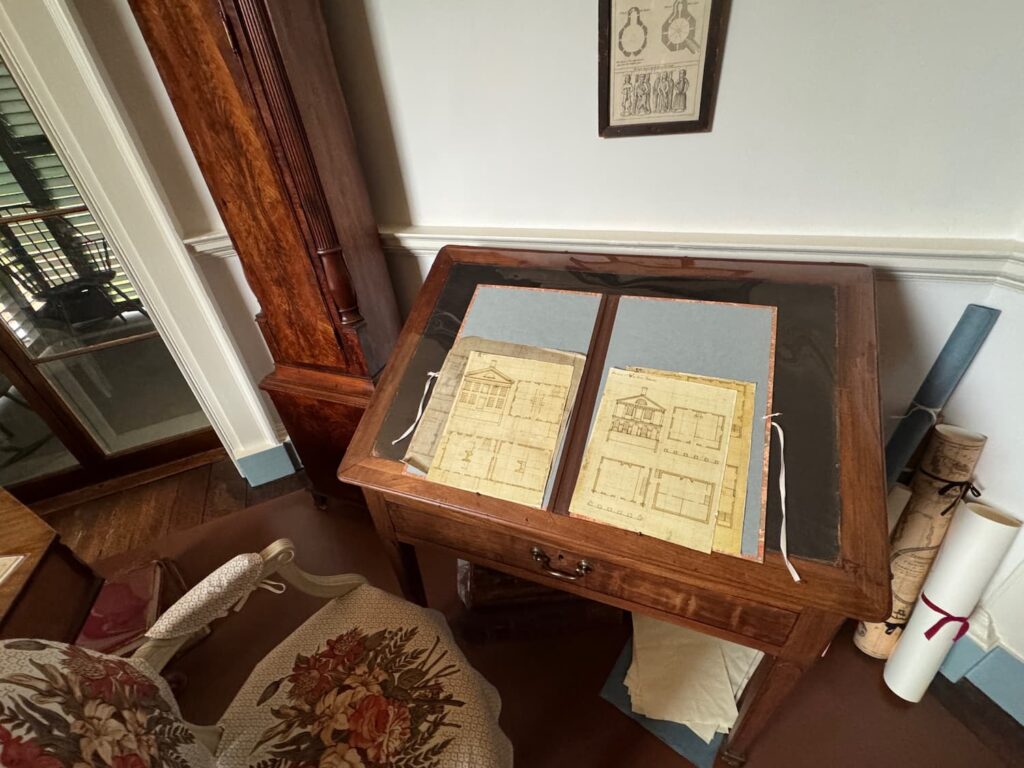
Some of Jefferson’s original drawings for Monticello.
The bedroom
Jefferson’s bed was in an alcove. The bed was remarkably short for a tall man of his time at 6”2” but it is thought that he slept propped on pillows. Access was also available from both sides of the alcove as you can see in the photo. It was a curious design for the time, combined with storage in the alcove walls above the bed. He reserved the main bedroom area as a larger open space.
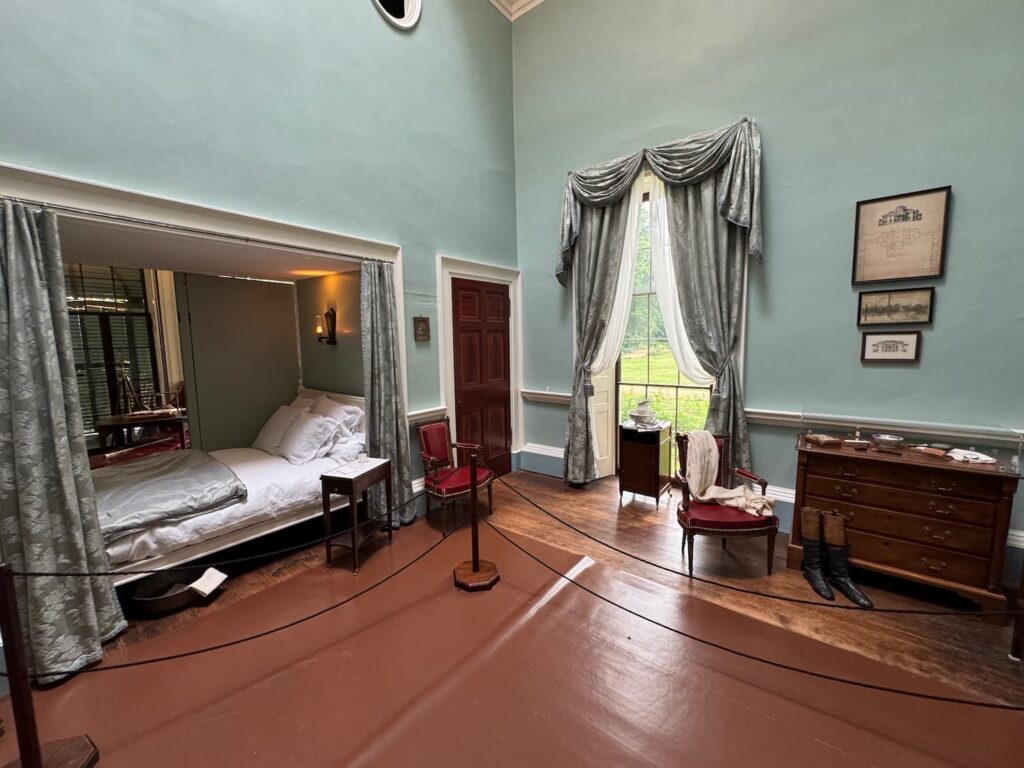
Cold plunges may have been popularized recently, but Jefferson was an early adopter. He had a daily ritual of putting both feet in a cold water bath every morning. Honestly, it’s the details like this that make history come to life isn’t it?
When Jefferson lost his wife in her 30s, she asked him to never re-marry, and he honored that. He did however father six more children with his enslaved housekeeper Sally Henning, a fact that has only recently been validated through DNA testing. Descendants of Sally Henning had passed down the stories of their Jefferson lineage in family stories, but until fact was verified by science, this inconvenient truth didn’t make it into American history books.
The Sally Henning story was acknowledged but quickly glazed over. Many Americans my age on the tour, who had never been taught this piece of history, appeared uncomfortable with re-framing their previous learning.
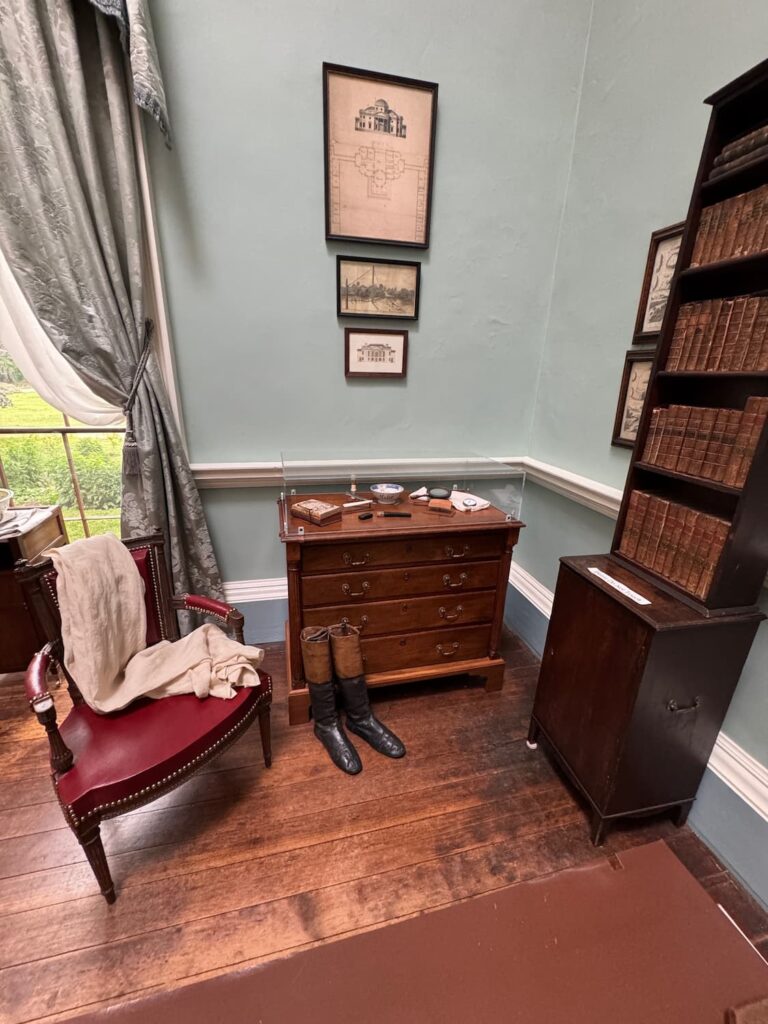
Notice the boots worn by Jefferson above. At the time footwear wasn’t made with a designated left or right foot. The boots could be interchanged when worn.
The parlor
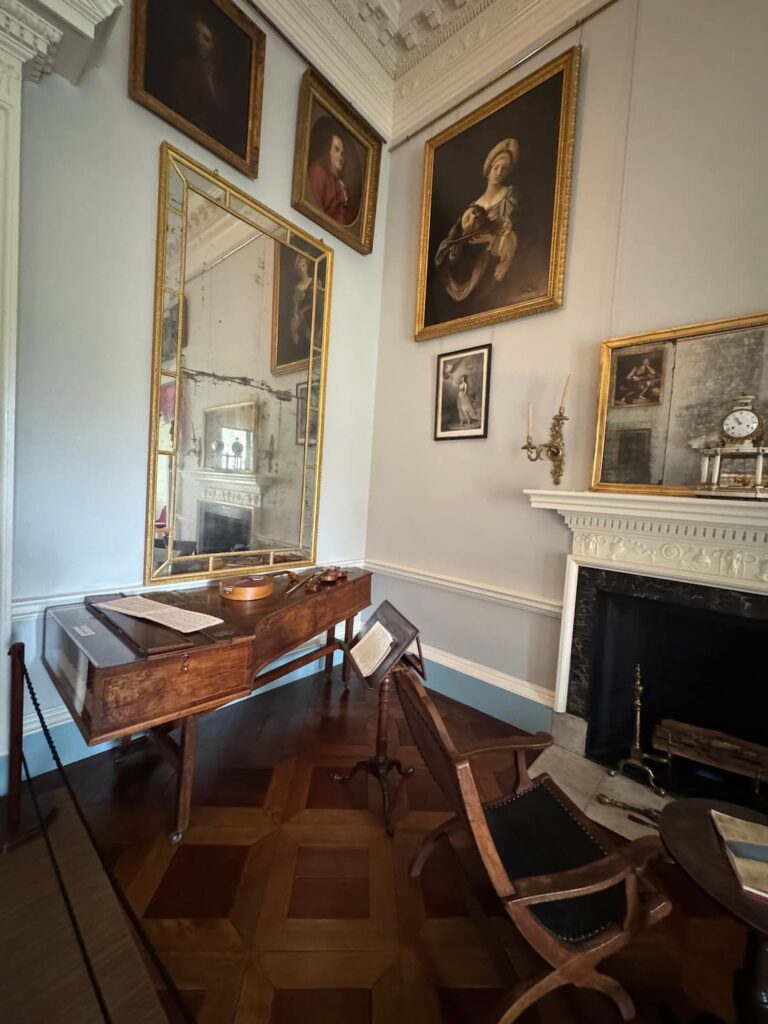
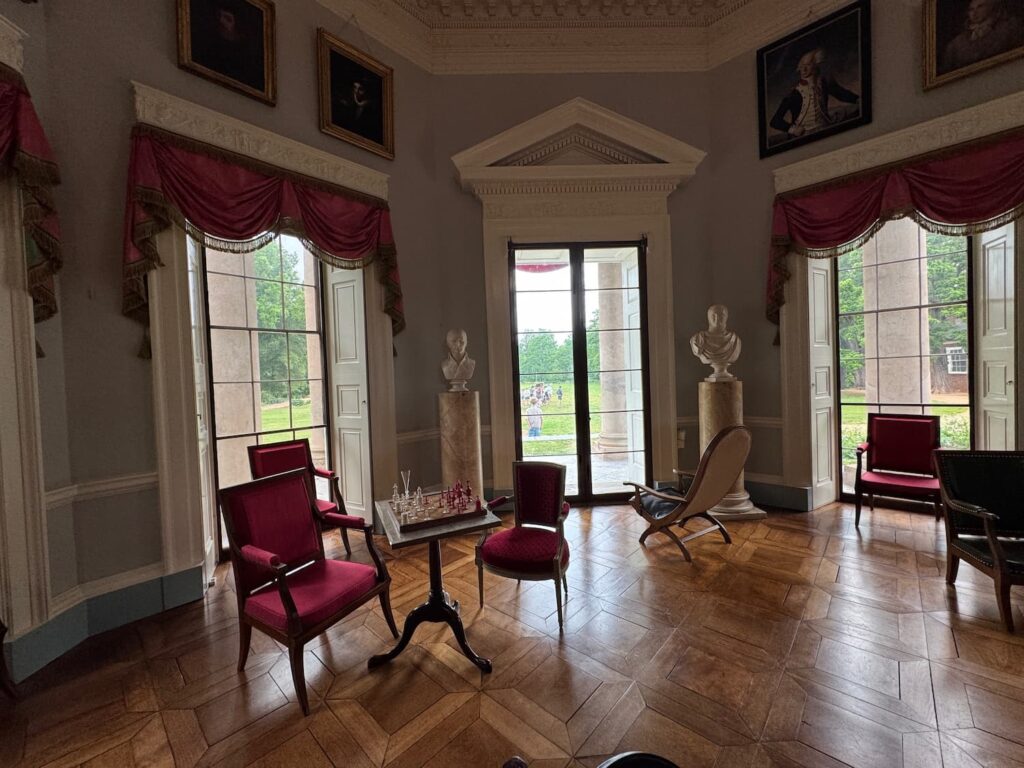
Jefferson loved music and board games. That was on full display with the musical instruments he had acquired, and the chess board in the parlor. The parlor is also where his children would play.
The kitchen
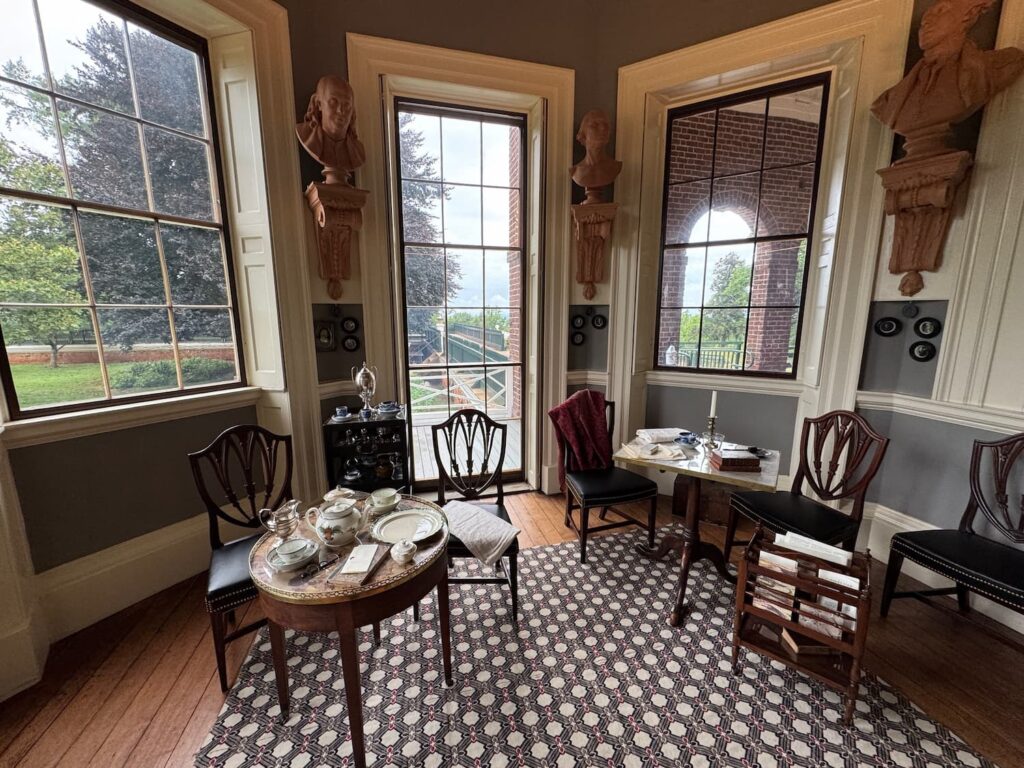
We learned that meals where prepared by enslaved cooks and served in the kitchen area of the home to Jefferson and his many political guests visiting the property. Some of the original plates and cutlery were laid out on display.
Self-guided installations on slavery
The highlights tour of Monticello includes a Slavery at Monticello tour as well, which I would highly encourage you to attend. But there are some excellent installations along the enslaved family quarters, rimming the basement of the walkway to the South Towers which are very informative. This is where I learned the additional back story about Sally Henning, and the children Jefferson fathered with her. That detail was not on full display during the narrated tour. (More on that in the “Tangled Tale of France” section at the end of this article).
Jefferson the man
Thomas Jefferson valued science and education, and was seen as a man of enlightenment. He founded the University of Virginia in 1819, which later opened in 1824. He was interested in climate science, documenting the wind direction and speed plus the barometric pressure. Some of that interest was on display in his residence – through documents, his writings, and a sophisticated design wind direction meter incorporated into the main entrance porch of Monticello. You can look up to the ceiling of the entry veranda, and see the wind direction indicator attached to the wind vein on the top of the roof.
Jefferson died at the age of 82. His wife Martha died at 33 giving birth to their sixth child. And four of their six children would later die from illness.
We learned for all his success in politics, Jefferson died in debt, and slaves from Monticello were sold off to meet his financial obligations. Many families were split up during the process.
US Navy officer Uriah Phillips Levy purchased Jefferson’s Monticello in 1834 for $2500 to save the declining estate. Later his nephew, Congressman Jefferson Monroe Levy took full ownership in 1879, and together they preserved it for historical education.
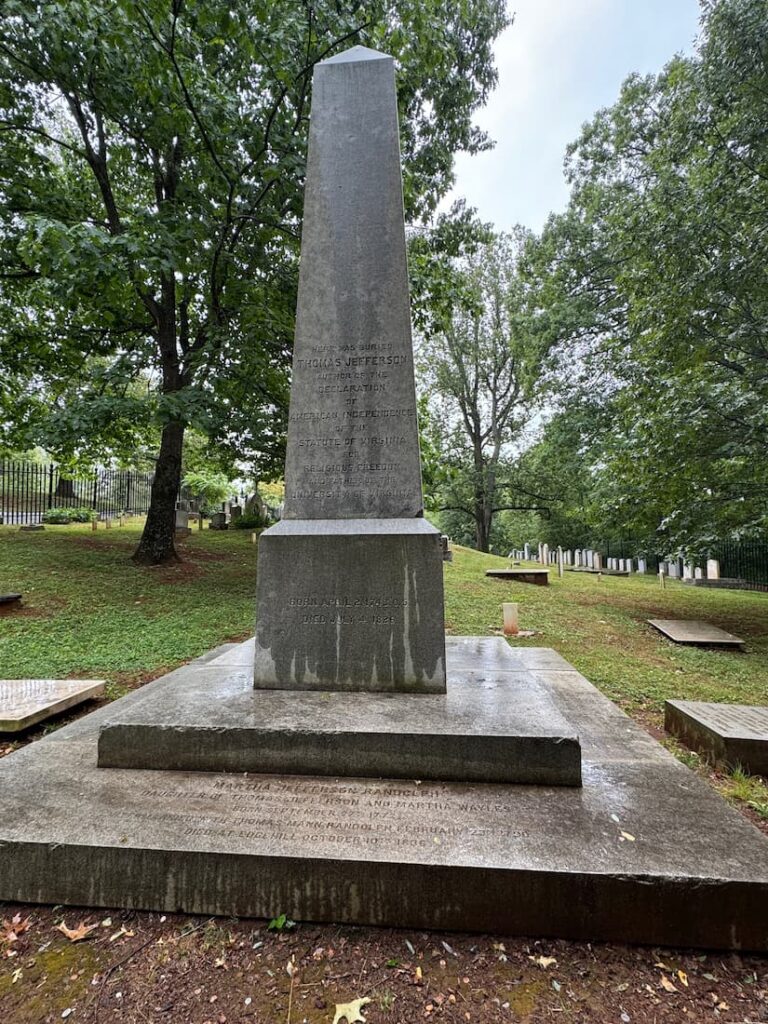
Thomas Jefferson gravestone
On the shuttle bus down from the Monticello plantation, visitors have the option of stopping at the grave site of Thomas Jefferson. The entire graveyard for the family is fenced, but Jefferson’s stone is displayed prominently just behind the gate.
A tangled tale in France
After his wife died, Jefferson went to France as the Ambassador from the US. It’s thought that he was in deep mourning at the time, and that leaving Monticello and Virginia would help him heal.
During that time he sent for his oldest daughter Martha, who was at the time 12 years old, to come to France. She was accompanied by Sally Henning who was then 16 years old, and an enslaved worker at the plantation. During her time in France, Sally was free, and when it came time to return to Virginia, she did not want to go.
Madison Henry, the son of Sally Henry later recounted that his mother negotiated a treaty with Jefferson, if she was to return to Virginia. The arrangement was that any children she would bear in the future would be freed at the age of 21 from slavery.
When Jefferson and Sally returned to the US, Sally was pregnant with Jefferson’s child, but that baby was lost when it was born in the US. But Jefferson would go on to father five more children with Sally Henning, four of whom were listed on the “Role of negros in 1810” at Monticello. It seems hard to believe that Jefferson enslaved his own kin, born to an Afro-American woman, and denied they were his children.
In total, there were 607 slaves owned by Jefferson at Monticello over the years. In the end, he freed seven plus three others. All were members of the Henning family. Four were his children when they turned the age of 21, so he did indeed keep his promise to Sally.
A reflection
It’s obvious that Thomas Jefferson had a complicated relationship with slavery. He believed in it and benefited from slaves on his property. But he also believed in liberty and freedom for all, as evidenced in the Declaration of Independence, which he wrote. It is said that he thought slavery would end with the next generation because he felt it was too complex to end it politically during his tenure. There was a real fear of violence and retaliation from enslaved people if they were freed on mass.
A troubling question
On my drive from Charlottesville back to Richmond, after visiting Monticello, I found myself reflecting on the tour and doing some mental math along the freeway. I arrived at a question I wish I had been able to ask during the tour. I’ve since queried a number of knowledgeable people, but the question remains unresolved.
The mental math question at 80mph on the freeway was this:
Jefferson had six kids with Martha and four died, but he took only his daughter Martha to France. Since she was 12 at the time, by default there had to have been a remaining sibling who was younger. Did Jefferson actually leave one of this young children in Virginia while he was in France for five years?
And how could he have fathered four children with Sally Henning, and then allowed his own children to have been enslaved at his plantation until they turned 21? As the author of the Declaration of Independence, where it was stated that “all men are created equal” and that we shall “preserve life, liberty and freedom” I found it hard to reconcile the history with the man who has been commemorated in it. It appears that Thomas Jefferson’s leadership was wrapped in complicated packaging.
Is Monticello worth visiting?
So, is Monticello worth visiting? The plantation and Jefferson the man both have deep roots in US history. They house American pride, but also buried pain and truth. For these reasons, Monticello is definitely worth visiting to help understand the complexities of American history.
Where to stay in Charlottesville
The Clifton
If you’re looking for a unique accommodation experience in the Charlottesville area, with oodles of history, and a higher end stay, may I suggest The Clifton, on its rolling estate just outside town? https://www.the-clifton.com/ Built in 1799, and the original residence of William Randolf and his wife, Martha Jefferson, the eldest daughter of Thomas Jefferson, you will be charmed by the property and services. The “1799” restaurant and the estate dining experience is worth an evening even if you’re not staying at the inn.
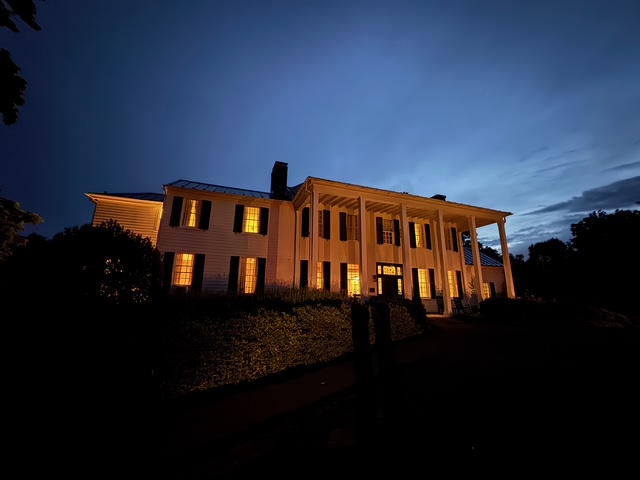
Link here to a more detailed review of my stay at The Clifton: https://carryonqueen.com/the-clifton-in-charlottesville/
More Virginia content
Shenandoah National Park is definitely worth your time while visiting the area. Check out recommended hikes, and how to see the best the park has to offer in a single day, if your time is limited. Read more here: https://carryonqueen.com/one-day-in-shenandoah-national-park/

Mary Charleson
Mary Charleson is an award winning travel writer and marketing/media strategist for 50+ adventure travellers. She publishes Carryonqueen.com and FiveMinuteMarketing.com. In 2025, Carryonqueen.com was awarded 2nd place for Best Self-Published Travel Website by Travel Media Association of Canada (TMAC). Mary also speaks to tourism leaders about marketing strategy and inspires audiences to explore.